
Last updated October 16, 2026
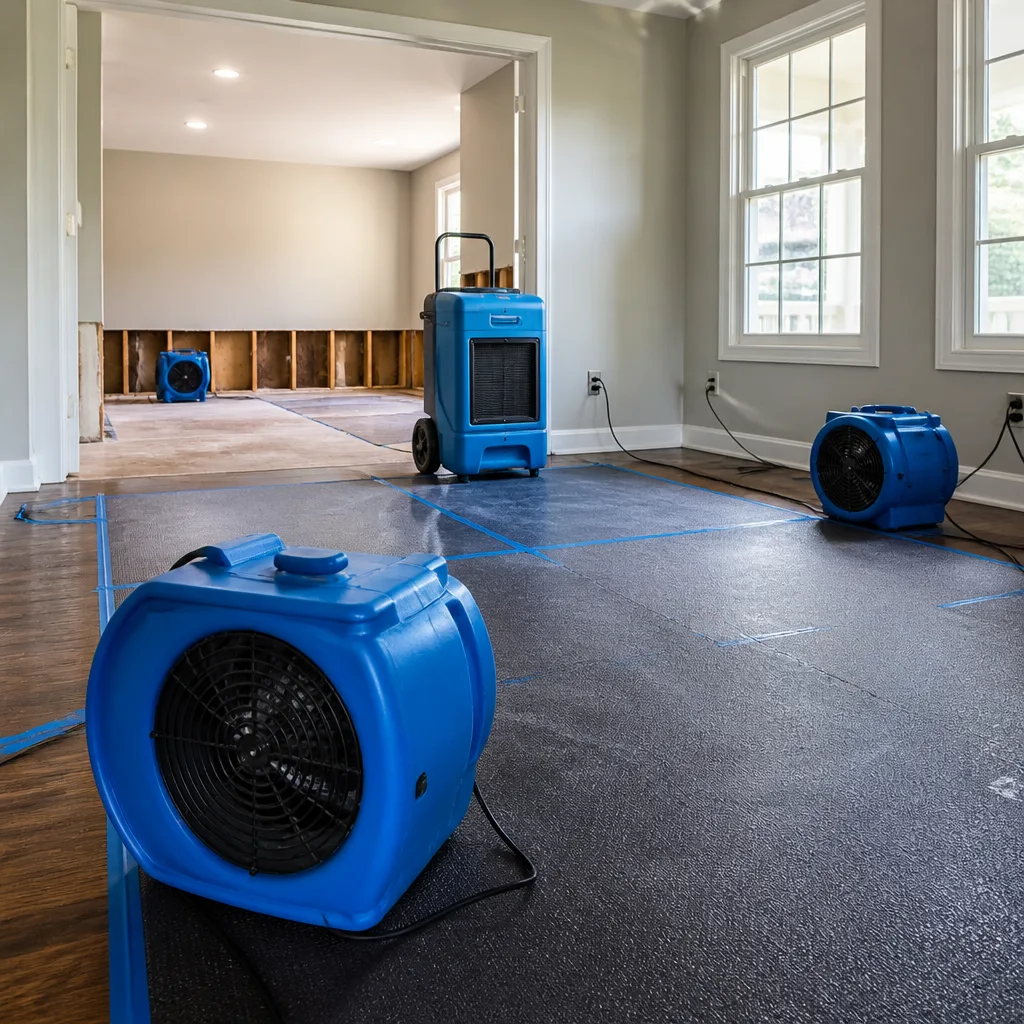 Water damage drying
 Fire & smoke cleanup
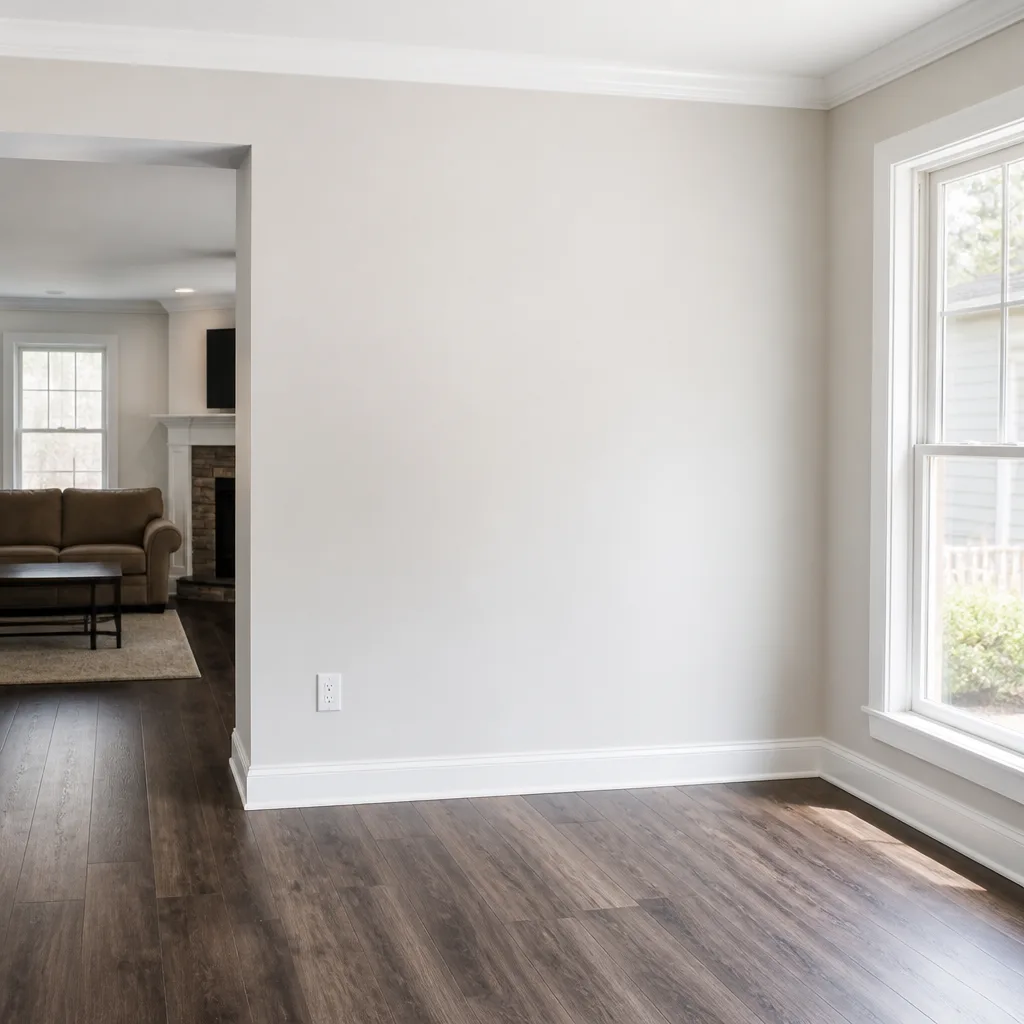 Mold remediation
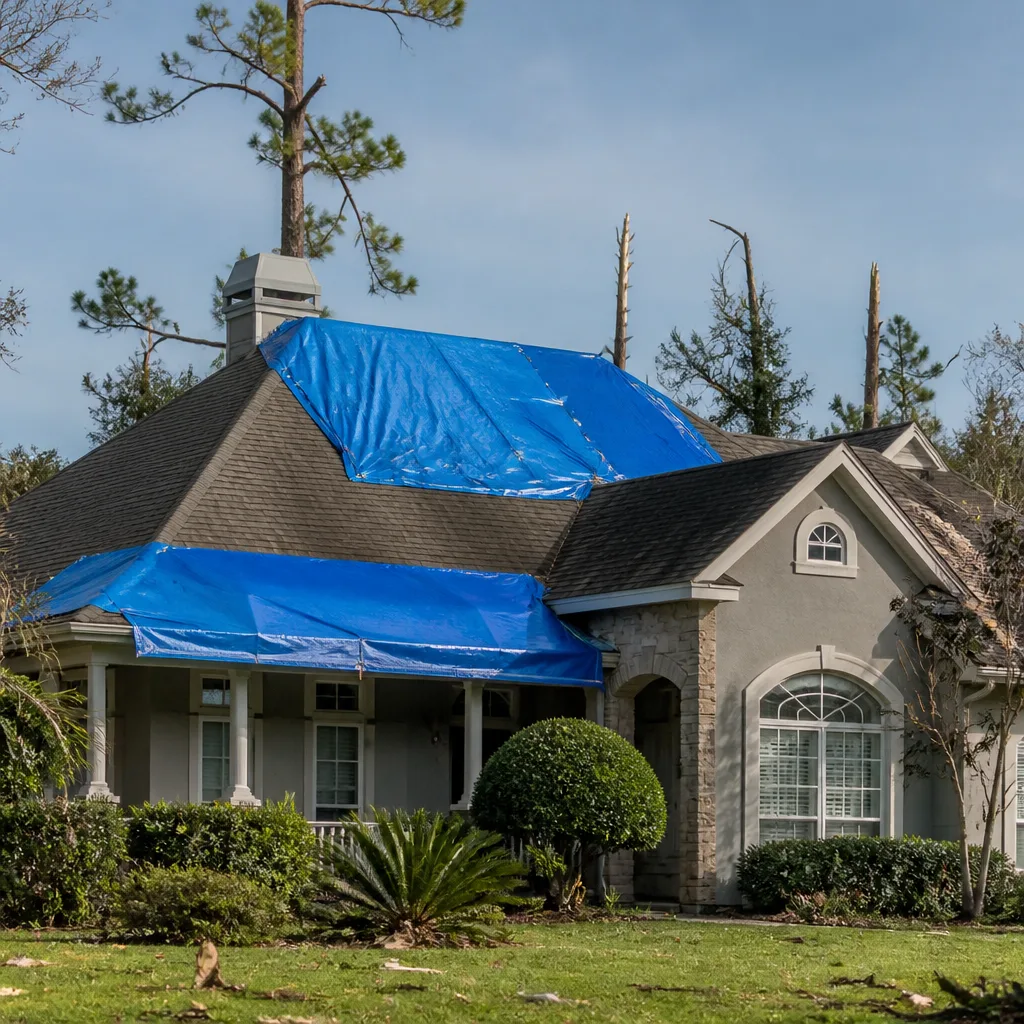 Storm response
 Sewage cleanup
 Reconstruction
Free visual inspection and a written scope of work before any mitigation begins - photos, moisture readings, and drying logs go in your claim file
The scope we write is the scope we bill. Anything new gets shown to you, in writing, before we touch it.
Get your free estimateDamage Restoration Permits, Codes & Inspections in CA: What You Need to Know
Most homeowners assume permits are the contractor’s problem. That assumption has cost California homeowners real money. An unpermitted restoration job can void your insurance coverage on future claims and create a title headache when you sell. In San Diego, where water damage from slab leaks and coastal moisture is common, drywall repair after a pipe burst is routine work. But routine doesn’t mean unregulated. This guide explains exactly when a permit is required for restoration work in California, what happens if you skip it, and how San Diego’s permit system works in practice. For damage restoration warning signs every San Diego homeowner should know, see our companion guide. You’ll learn the thresholds that trigger a permit, how to verify your contractor pulled one, and what to do if a previous owner left an open permit on your house.
Quick Answer
In California, a permit is required for restoration work when structural materials like drywall, framing, electrical wiring, or HVAC components are being replaced or substantially altered. Cosmetic work like painting, trim replacement, and floor refinishing generally does not require a permit. In San Diego, permits are pulled through the City of San Diego Development Services Department for city residents or the County of San Diego Planning & Development Services for unincorporated areas. An unpermitted restoration job can invalidate future insurance claims and must be disclosed when you sell your home.
Restoration work we handle
Table of Contents
- When Is a Permit Required for Restoration Work in California?
- San Diego Permit Jurisdictions: City vs. County
- Mold Remediation and California’s CDPH Guidelines
- What the Inspection Process Looks Like Step by Step
- How to Confirm Your Contractor Pulled a Permit
- How to Close a Permit the Previous Owner Left Open
- The Insurance Connection: Permits and Your Coverage
- Disclosure Headaches: Permits and Selling Your Home
When Is a Permit Required for Restoration Work in California?
California Health and Safety Code Section 17960 and the California Building Standards Code (Title 24) set the legal framework for when a permit is required. The threshold that matters for restoration work is this: if the repair involves replacing or materially altering structural components, a permit is required. Structural components include load-bearing walls, floor joists, rafters, and the drywall that provides shear resistance. It also includes electrical wiring, plumbing pipes, and HVAC ductwork when they are being relocated, extended, or replaced rather than simply reconnected.
Here’s a practical breakdown we use when advising San Diego homeowners:
- Permit required: Replacing drywall on a wall or ceiling after water damage, because drywall is part of the building’s lateral force resisting system under California code. Any framing repair on studs, joists, or rafters. Any electrical rewire or panel work. Any HVAC duct replacement.
- Permit typically not required: Replacing baseboards, trim, or crown molding. Painting. Replacing flooring or carpet. Replacing cabinet boxes that are not attached to wall structure. Replacing a sink or toilet without moving the plumbing rough-in.
- Gray area: Replacing a section of drywall smaller than 32 square feet in a non-shear wall. Some inspectors consider this cosmetic. The City of San Diego’s Development Services Department does not, and neither does the County. If you’re not sure, call and ask. A 10-minute phone call is cheaper than an open permit on your title.
In our experience working across San Diego neighborhoods from Clairemont to Rancho Bernardo, the most common unpermitted restoration job is drywall replacement after a water heater leak or slab leak. Homeowners get the wall opened up, dried out, and patched. The repair looks fine. Two years later, an inspector flags it during a kitchen remodel and now there’s a retroactive permit problem. A water damage restoration in San Diego job that starts with proper permitting avoids that entirely.
San Diego Permit Jurisdictions: City vs. County
San Diego County contains the City of San Diego plus 17 incorporated cities, each with its own building department. The unincorporated areas of the county, places like Spring Valley, Alpine, Lakeside, Jamul, and Ramona, fall under the County of San Diego Planning & Development Services. The City of San Diego covers neighborhoods like North Park, Pacific Beach, La Jolla, Mira Mesa, Scripps Ranch, and over 100 others through its Development Services Department.
Here’s what that means for restoration work:
- City of San Diego: Permits are obtained through the Development Services Department, either online through the DSD portal or in person at the permit center on Overland Drive. Over-the-counter permits for simple drywall replacement are typically available 2 to 4 weeks from the date you walk in, depending on the current backlog.
- County of San Diego: Unincorporated residents pull permits through Planning & Development Services in Kearny Mesa or online through their e-Permitting portal. The county has simplified many over-the-counter permits in recent years, so simple drywall and framing permits sometimes move faster than city permits.
- Other incorporated cities: If you live in Chula Vista, El Cajon, Escondido, Oceanside, Vista, or any of the other 15 incorporated cities in the county, your permit comes from that city’s building department, not the City of San Diego and not the County. Each city has its own fee schedule and turnaround time.
The permit fee for a typical restoration job, which usually covers drywall replacement on one or two walls plus a little framing, runs between $150 and $400 for the permit itself. That’s independent of labor. If the job includes electrical or HVAC work, add another $75 to $200 per trade in most San Diego jurisdictions. The cost is modest. The cost of not pulling the permit is significantly higher, which we’ll get to below.
Mold Remediation and California’s CDPH Guidelines
California has a specific law for mold: the Toxic Mold Protection Act of 2001, codified as California Health and Safety Code Sections 26100-26156. The California Department of Public Health (CDPH) published mold assessment and remediation guidance under this law, but here’s the part most homeowners don’t realize: the CDPH guidelines are recommendations, not enforceable regulations for most residential work. There is no state-issued mold removal permit.
However, a mold job often triggers permit requirements through its collateral work. If mold remediation requires removing and replacing drywall, the drywall replacement is permit-triggering under the same structural logic as water damage. If the remediation includes replacing insulation in a wall cavity, that’s also permit-adjacent because newly installed insulation must meet current Title 24 energy code requirements. If the mold remediation is part of a water damage restoration claim where electrical outlets or HVAC registers were affected, those systems may require inspection even if the work is repair rather than replacement.
On the contractor question: California State License Board (CSLB) rules require a contractor’s license for any work that exceeds $500 in combined labor and materials. A handyman cannot legally perform mold remediation on a job of that size. For mold specifically, the CSLB considers remediation to fall under the general building contractor classification (B) or the specialty classifications for painting and decorating (C-33) if it includes surface treatment. The IICRC Mold Remediation Specialist (MRS) certification is the industry benchmark for training, but it is not a state license. When we recommend a mold remediation company in San Diego, we tell homeowners to verify both: a CSLB license for the legal work and IICRC certification for the method.
What the Inspection Process Looks Like Step by Step
The inspection process for restoration work follows a consistent sequence in San Diego, whether you’re under the City or the County. Here’s the step-by-step, based on how we’ve seen it play out on hundreds of jobs since 2005:
- Permit application: Your contractor or you submit the permit application with a scope of work description. For most restoration jobs, this is an over-the-counter process. You or your contractor walk in, describe the work, pay the fee, and walk out with a permit number. Current San Diego timelines run about 2 to 4 weeks from application to issuance for over-the-counter permits, depending on backlog.
- Scheduling the inspection: Once the work is complete, your contractor calls the inspection line or schedules online. In the City of San Diego, inspections are typically scheduled for a morning or afternoon window rather than a specific time. You’ll get a window, not an appointment. This is why having a live person answer the phone at your restoration company matters: the inspector’s office calls during business hours, and someone needs to pick up.
- The inspection itself: The inspector checks the permitted scope of work. For drywall replacement, they’re looking for proper nailing or screw spacing, correct drywall thickness for the location, proper fire-rated drywall where required (typically 5/8-inch Type X in garages and around furnaces), and closure of all penetrations. For electrical work, they check grounding, arc-fault circuit interrupter (AFCI) or ground-fault circuit interrupter (GFCI) requirements, and box fill. For framing, they check stud spacing, bearing points, and any Simpson Strong-Tie or similar connector to confirm it matches the engineered detail.
- Pass or correction: If the work passes, the inspector signs off and the permit is closed. If there are corrections, the inspector issues a correction notice listing exactly what needs to change. Your contractor fixes the issues and schedules a re-inspection. Re-inspection fees in San Diego run around $75 to $150, and the general expectation is that the contractor who made the mistake pays them, not the homeowner.
- Permit closure: The permit is not closed until the final inspection passes. A permit that has been issued but not closed is an open permit. Open permits are the silent title problem we discuss below.
One San Diego-specific note: the City of San Diego has been using photo documentation more heavily since 2020. Some inspection types now allow contractors to submit photographic evidence of the work in lieu of an in-person inspection for low-risk items. Ask your contractor whether your restoration scope qualifies. It can save days on the back end.
How to Confirm Your Contractor Pulled a Permit
When you hire a contractor in San Diego, you should receive a permit number before work begins. Every legitimate contractor pulls the permit before the first tool touches the wall. If your contractor says they’ll pull the permit “as they go” or “at the end,” that’s a red flag. It means the work is unpermitted right now, and it may stay that way.
Here’s how to verify a permit in San Diego’s two main jurisdictions:
- City of San Diego: Go to the DSD online portal, search “Permit Lookup,” and enter your address. You can see all permits issued for the property going back years. If the permit was issued, it will show as “Issued” or “Open.” If it shows “Finaled,” the inspection passed and the permit is closed.
- County of San Diego: The county’s e-Permitting portal has a similar lookup function. Enter your address or Assessor Parcel Number (APN) and you’ll see all permits associated with the property. The county also shows inspection status for each permit.
- Other cities: Chula Vista, El Cajon, Escondido, and other incorporated cities each have their own permit lookup tools. Search “[City name] permit lookup” and enter your address.
One practical tip: ask your contractor for the permit number in writing before you pay the first draw. Not the application number. The permit number. An application is not a permit. If they can’t give you a permit number, the work is running unpermitted. The Kingswell Way we follow is to put the price in writing before work starts, and the permit number is part of that written scope. If the number doesn’t exist, neither does the legal authorization.
How to Close a Permit the Previous Owner Left Open
Open permits are one of the most common title surprises we encounter in San Diego. Here’s how it happens: a previous owner had restoration work done, the contractor pulled a permit, the work was completed, but the final inspection never happened. Maybe the contractor went out of business. Maybe the owner sold before scheduling it. Maybe the inspection found a correction and nobody followed up. The result is an open permit that sits on the property record indefinitely.
An open permit matters because the work on that permit was never inspected. To a title company or a buyer’s lender, uninspected work is unverified work. It complicates refinances, sales, and insurance underwriting. Here’s the path to close an open permit in San Diego:
- Identify the open permit: Use the DSD or County permit lookup tool described above. Note the permit number, date of issuance, and the scope of work described.
- Contact the issuing department: Call the Development Services Department for City permits or Planning & Development Services for County permits. Ask what is needed to close the permit. You’ll typically be told that an inspection is required.
- Schedule the inspection: In most cases, the current homeowner can schedule the inspection even though they did not perform the work. You may need a licensed contractor to be present so they can speak to the work and make any corrections required by the inspector.
- Complete any corrections: If the inspector finds code violations from the original work, the correction is typically made by a licensed contractor. The cost of these corrections is the cost of closing the permit, and it’s generally not covered by any existing insurance policy.
- Final inspection and closeout: Once the re-inspection passes, the permit is closed. Get written confirmation. This closes out the title issue and clears the property record.
In our experience, most open permits from restoration work are closable in a single inspection. The work is usually fine. The prior owner simply never scheduled the final. But sometimes the inspector flags a real problem, like missing fire-rated drywall between a garage and living space, which is surprisingly common in older San Diego homes. That’s when the cost goes from a $150 inspection fee to a few thousand dollars in correction work. Better to know now than at the closing table.
The Insurance Connection: Permits and Your Coverage
Here’s the scenario we opened with, and it’s worth understanding in full. A San Diego homeowner had a pipe burst in a bathroom wall. The drywall was opened, dried, and patched. No permit. A year later, mold appeared in the same wall cavity. The homeowner filed an insurance claim. The insurance company denied the mold claim, and here’s the exact logic they used: the original repair was completed without a permit, which means it was not inspected, which means the insurance company cannot verify the work was done to code, which means the mold growth is classified as a maintenance failure resulting from improper prior work rather than a covered sudden loss.
Insurance policies in California almost always contain language requiring the homeowner to maintain the property in a condition that prevents further damage. Unpermitted work undermines exactly that condition. The insurance company’s position, in plain terms, is this: if the work had been permitted and inspected, the inspector might have caught a problem that would have prevented the mold. Because there was no inspection, the insurer treats the resulting damage as the homeowner’s responsibility.
This applies to water damage, mold, and, in some cases, fire damage restoration work in San Diego. A fire restoration job that includes electrical work without a permit creates the same exposure: if a future electrical problem occurs, the insurance company can point to the unpermitted repair as the cause. The lesson is direct: a permit is a form of insurance, and it costs less than a single denied claim.
When insurance is involved in the restoration, you also want photo documentation of the damage and the work. Restoration companies that work with insurance claims regularly should photograph everything before, during, and after, and coordinate directly with the adjuster. The documentation creates a record that supports your claim and makes it harder for the insurer to characterize the work as a maintenance issue. The Dryden team does this on every job, and we make those photos available to you and your adjuster without resistance.
Disclosure Headaches: Permits and Selling Your Home
California Civil Code Section 1102 requires sellers to disclose material facts about the property. Unpermitted work is a material fact. The California Association of Realtors disclosure form specifically asks whether any work was performed without a permit, and whether any permits remain open. If you answer yes to either, the disclosure affects your sale in predictable ways.
Buyers who discover unpermitted work have several options: they can proceed and assume the risk, they can negotiate a price reduction to cover the cost of retroactive permitting, or they can walk away. In a strong seller’s market, some buyers will overlook unpermitted work. In a balanced market, they won’t. And in any market, a buyer’s lender may decline to fund a loan on a property with unpermitted structural work. Fannie Mae and Freddie Mac underwriting guidelines specifically call for appraisers and underwriters to note unpermitted additions or alterations, and structural unpermitted work can kill the deal entirely.
The retroactive permit process for restoration work is not onerous. You schedule an inspection, the inspector reviews the work, and if corrections are needed, they’re made. But the retroactive inspection has to be scheduled by someone. If the seller discloses unpermitted work and the buyer wants it fixed before closing, you’re negotiating the cost and timeline under pressure. The alternative is pulling the permit before you ever touch the wall, which costs a few hundred dollars and removes the disclosure entirely. We’ve seen both paths play out in San Diego closings, and the permit-first path is dramatically cheaper. Dryden Restoration San Diego home is straightforward about this: we pull permits on every job that requires one, and we put that in writing in your scope of work.
Common Mistakes to Avoid
- Trusting a contractor who says “you don’t need a permit for this.” Drywall replacement, framing repair, and electrical work are the three restoration tasks that most commonly trigger a permit in San Diego. A contractor who waves this off is describing illegal work.
- Paying in full before the final inspection passes. Your last payment should not clear until the inspector signs off and the permit is closed. This is the only leverage you have to ensure corrections are made.
- Confusing a permit application with a permit. An application is a piece of paper. A permit has a number and authorizes work. Confirm the permit number before work starts.
- Forgetting that permit jurisdiction follows your address, not your contractor’s office location. A contractor based in El Cajon must pull the permit from the City of San Diego if your house is in City limits. Where the contractor’s shop is located is irrelevant.
- Assuming the insurance company checks permits automatically. They generally don’t until there’s a claim. Then the absence of a permit becomes the reason to deny coverage. The burden is on you at that point.
- Selling a home without checking for open permits. If a previous owner or contractor left an open permit, the title company will find it during escrow. Finding it before you list gives you weeks to resolve it without a buyer pressing on the timeline.
- Using a handyman for mold or water restoration work over $500. California law requires a contractor’s license above that threshold, and both the city and county enforce it on complaint. Unlicensed work also invalidates the liability insurance coverage that would protect you if something goes wrong on the job.
See the difference
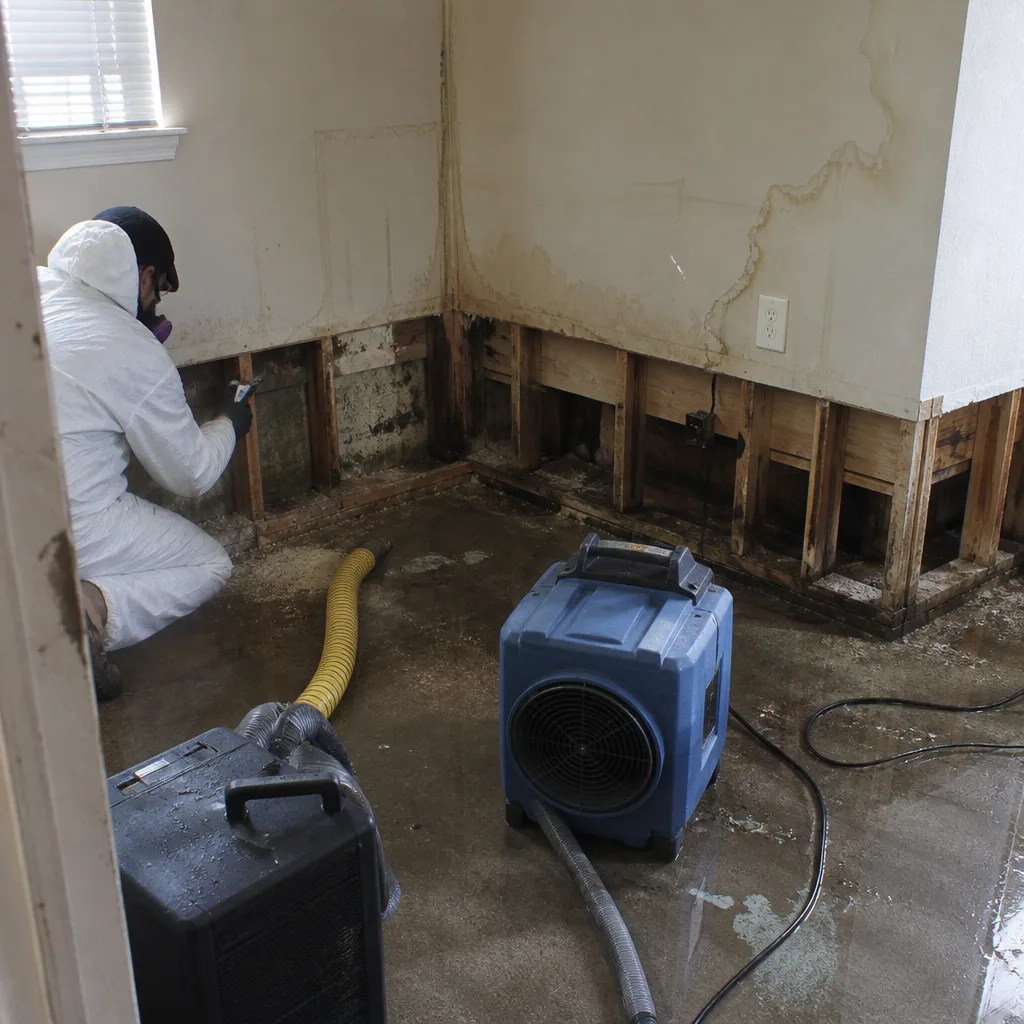 Before
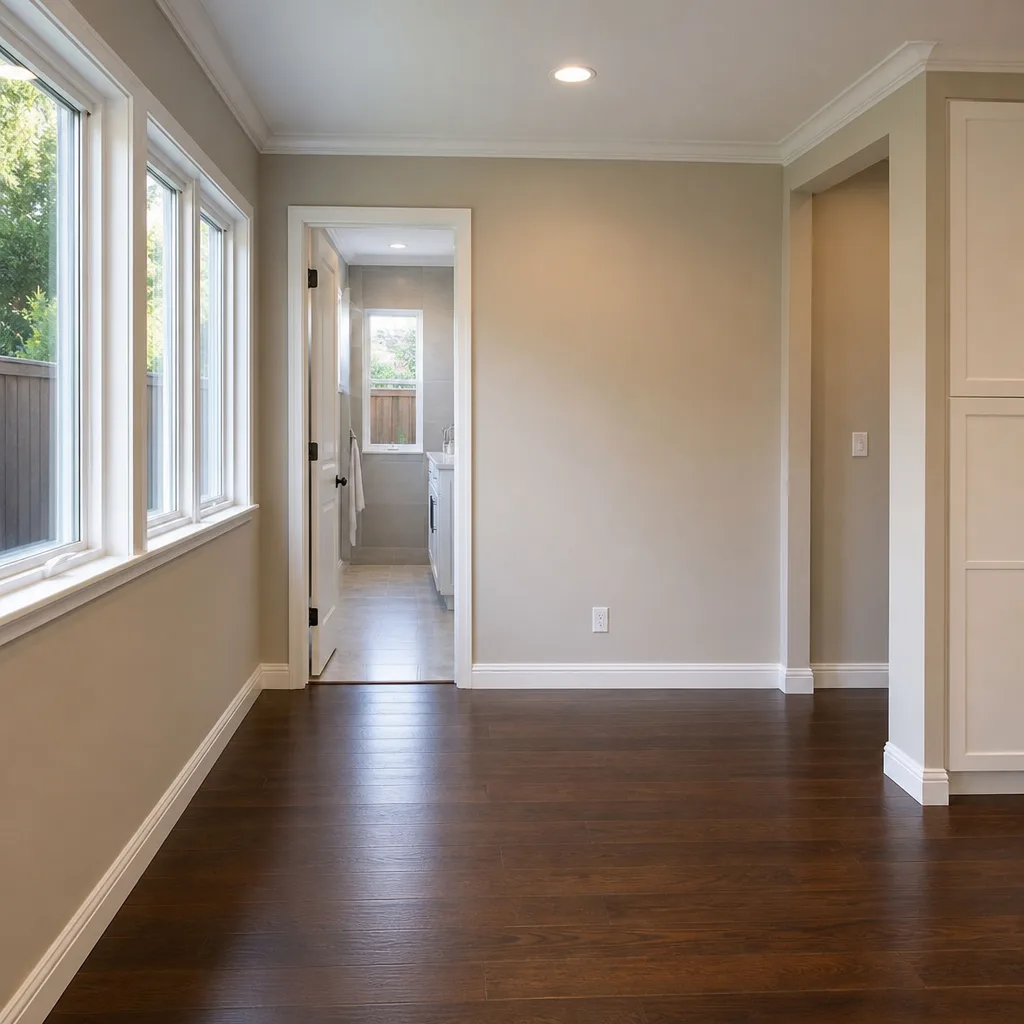 After
After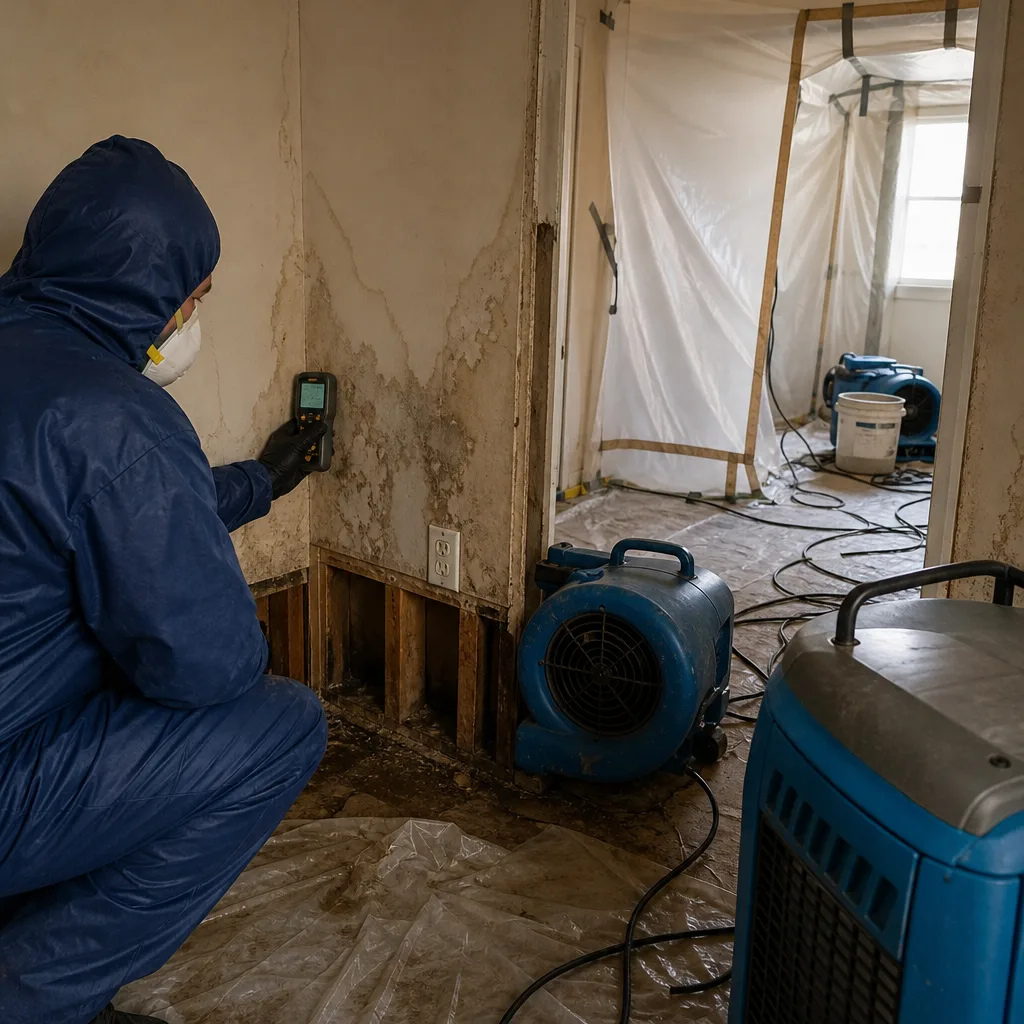 Before
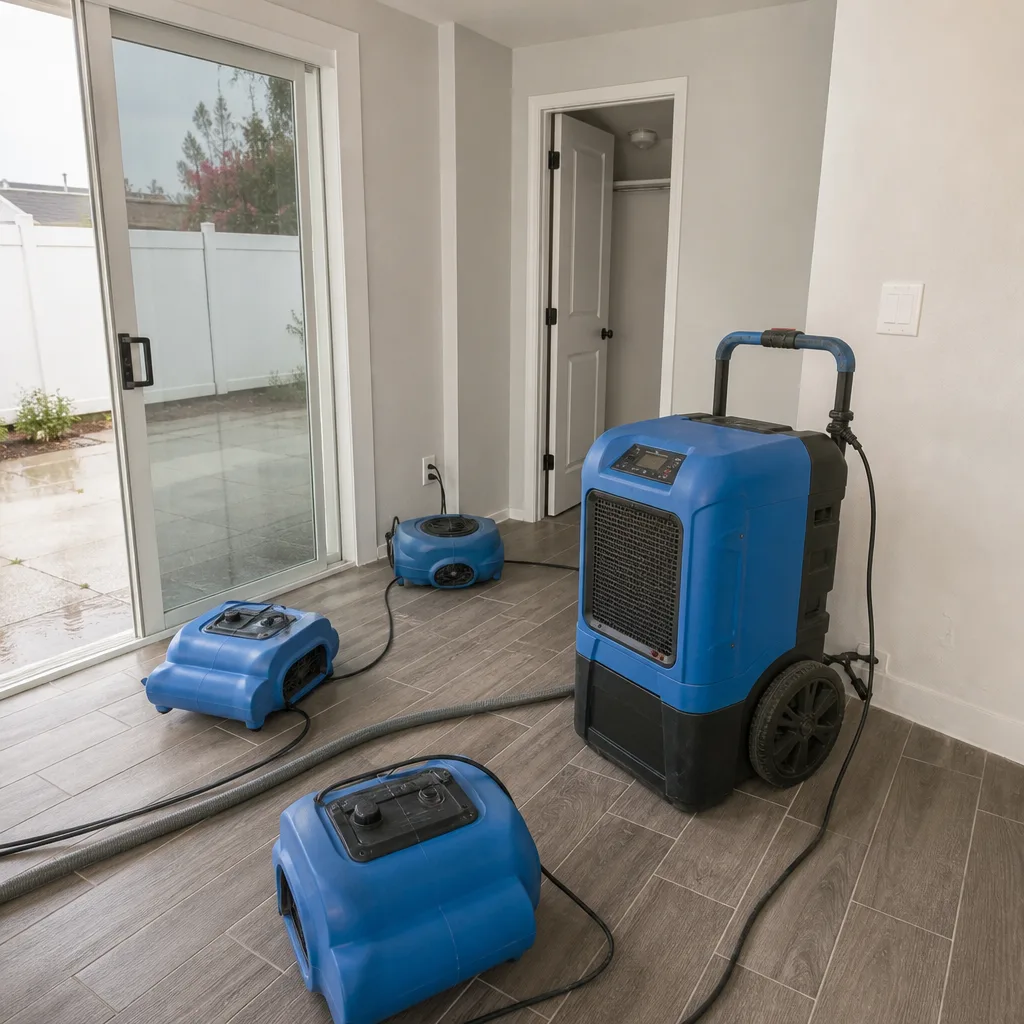 After
After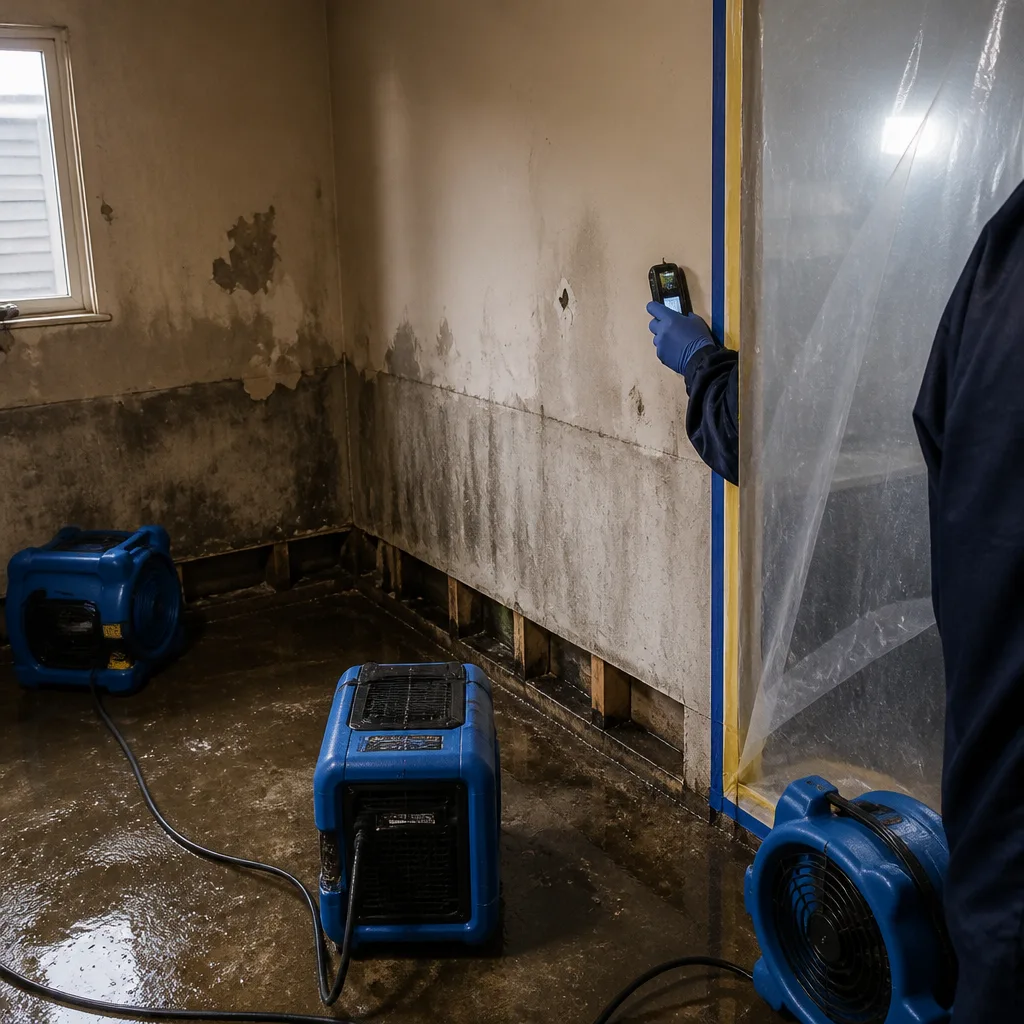 Before
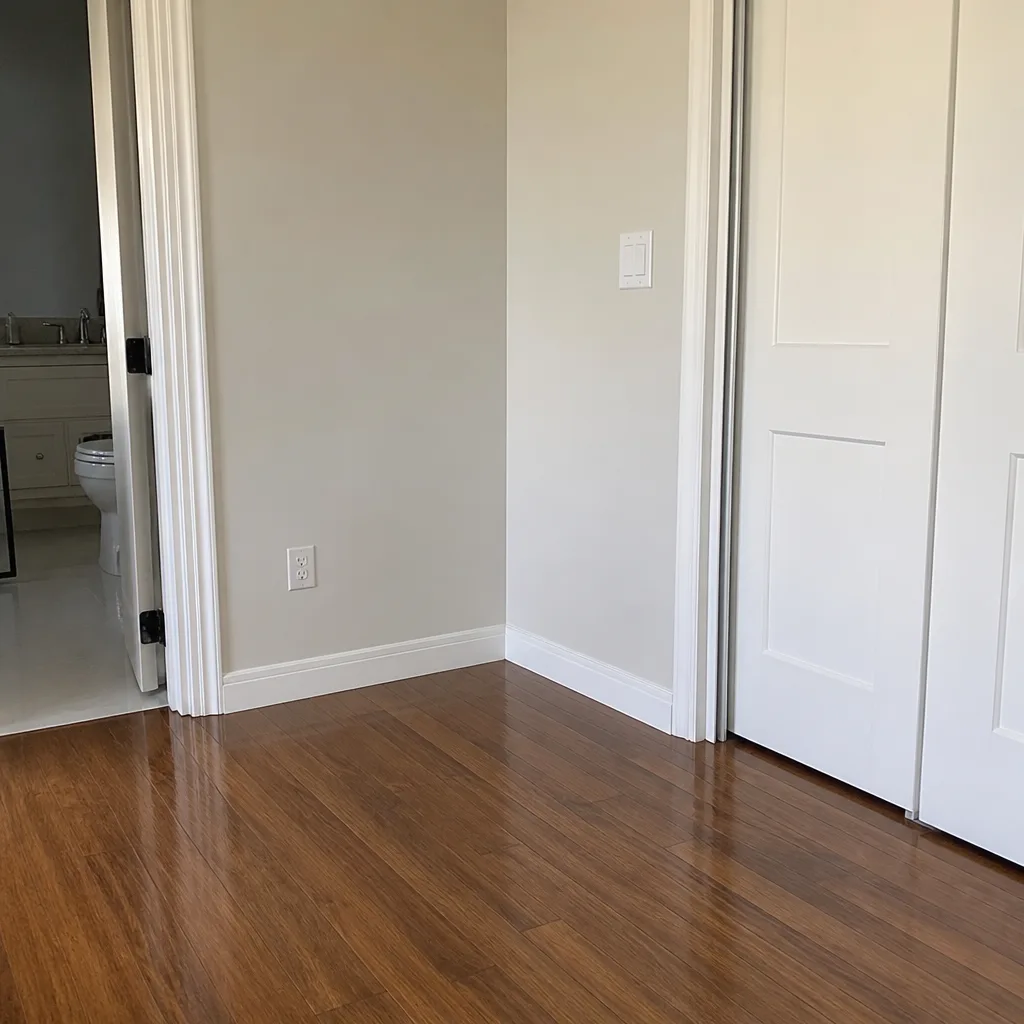 After
AfterWhen to Call a Professional
Restoration work sits at the intersection of building codes, insurance coverage, and health concerns. A plumbing leak that soaks a wall or ceiling is not just a cosmetic issue; the drywall is structural, the moisture creates conditions for mold, and the work needs to be done to current code. The IICRC standards we follow, along with RIA and IFA-aligned practices, are not uniformly applied by every contractor in San Diego. If your damage involves any structural component, any electrical wiring that got wet, or any ductwork exposed to moisture, a professional restoration company should be involved. The permit requirements are manageable, but they’re not optional, and a company that handles permits regularly will move through the process faster than a homeowner learning it from scratch, which is why we covered the DIY vs. professional restoration decision in depth for San Diego homeowners. Dryden Restoration San Diego offers free estimates in San Diego; call (619) 453-0410 and we’ll walk through your specific situation, including what needs a permit and what doesn’t.
Frequently Asked Questions
Water damage restoration requires a permit when the work includes replacing drywall, repairing framing, or altering electrical, plumbing, or HVAC systems. Cosmetic restoration work like painting, trim replacement, and floor refinishing does not require a permit. In San Diego, drywall replacement for water damage is a permit-triggering repair. Call (619) 453-0410 for a free estimate and we’ll tell you whether your specific job requires one.
Mold remediation is not separately licensed by the state, but any mold job exceeding $500 in labor and materials requires a California contractor’s license. The CDPH guidelines for mold are advisory rather than regulatory, but the structural work connected to mold removal, such as drywall replacement, is permit-triggering. IICRC certification is the industry training benchmark, though it is not a legal requirement.
Over-the-counter permits for simple restoration work in the City of San Diego currently take 2 to 4 weeks from application to issuance, depending on the Development Services Department backlog. The County of San Diego is typically faster for simple drywall permits. If you’re in a hurry, the process cannot be legally expedited by skipping it; an unpermitted job creates liability that lasts for years.
If you buy a house with unpermitted restoration work, you assume liability for the unpermitted condition. Your lender may have required a repair or retrofit before closing, or you may have accepted the condition through disclosure. Your insurance company may deny future claims where the unpermitted work is implicated. Closing the permit retroactively costs a few hundred dollars in most cases and resolves the issue. Call (619) 453-0410 and we’ll help you figure out what you’re dealing with.
Insurance companies in California have denied claims where unpermitted restoration work was implicated in the loss. The insurer’s position is that unpermitted work was never inspected, so the resulting damage is a maintenance failure rather than a sudden covered loss. Permitting your restoration is the cheapest insurance policy you’ll ever buy.
Yes, in San Diego and throughout California, replacing drywall after a leak is a permit-triggering repair because drywall contributes to the building’s structural shear resistance. The permit costs between $150 and $400 for a typical one- or two-wall restoration, and the inspection confirms the work meets current code. The cost of not pulling the permit is measured in insurance risk and disclosure problems when you sell.
The Bottom Line
Permits for restoration work are not paperwork busywork. They are the legal record that your repair was done correctly, which protects your insurance coverage and your ability to sell your home. In San Diego, drywall, framing, electrical, and HVAC work all trigger permit requirements, and the process is manageable: apply over the counter, complete the work to code, schedule the inspection, and close the permit. Unpermitted work is a liability that compounds over time, showing up in denied claims, failed escrows, and costly retroactive corrections. Pull the permit, keep the inspection record, and close it out. It’s the only way the work is actually done.
Written by Carl Brandt, Owner at Dryden Restoration San Diego, serving San Diego since 2005.