
Last updated October 16, 2026
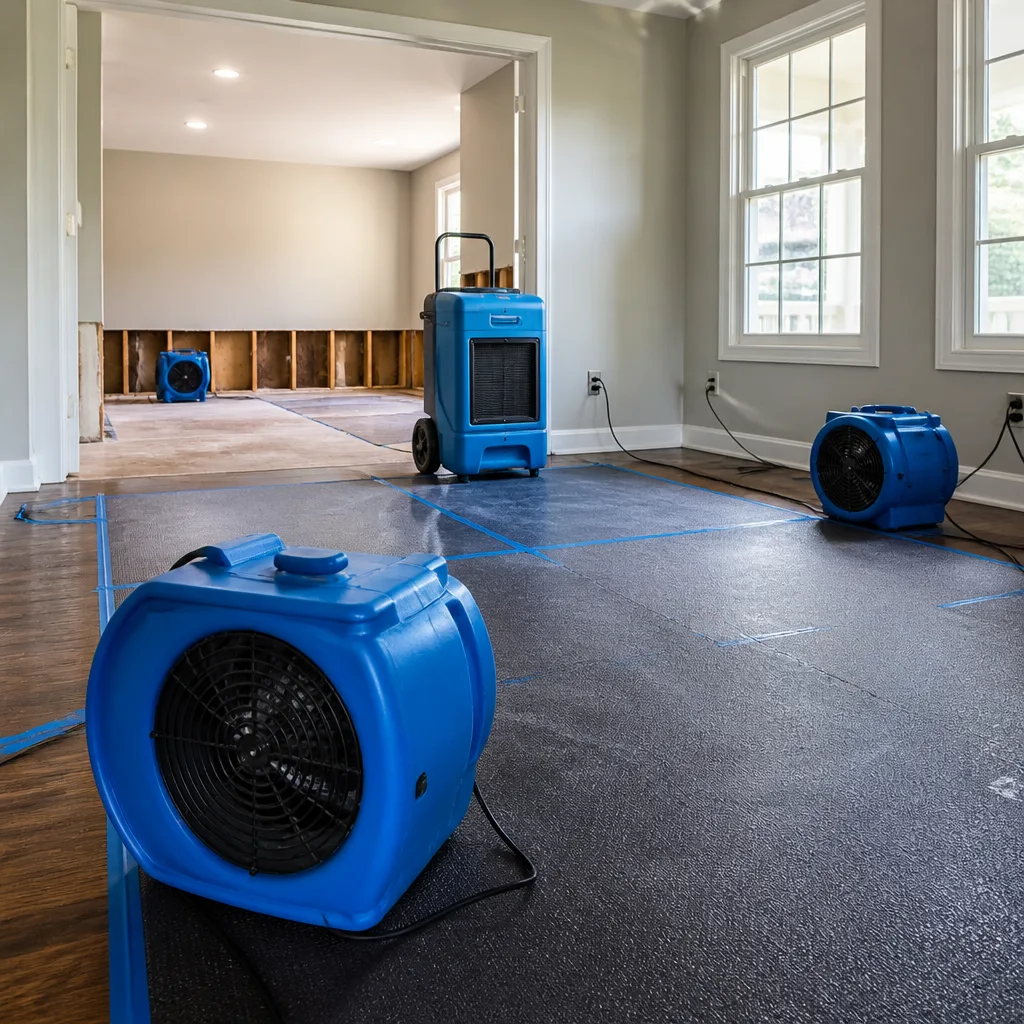 Water damage drying
 Fire & smoke cleanup
 Mold remediation
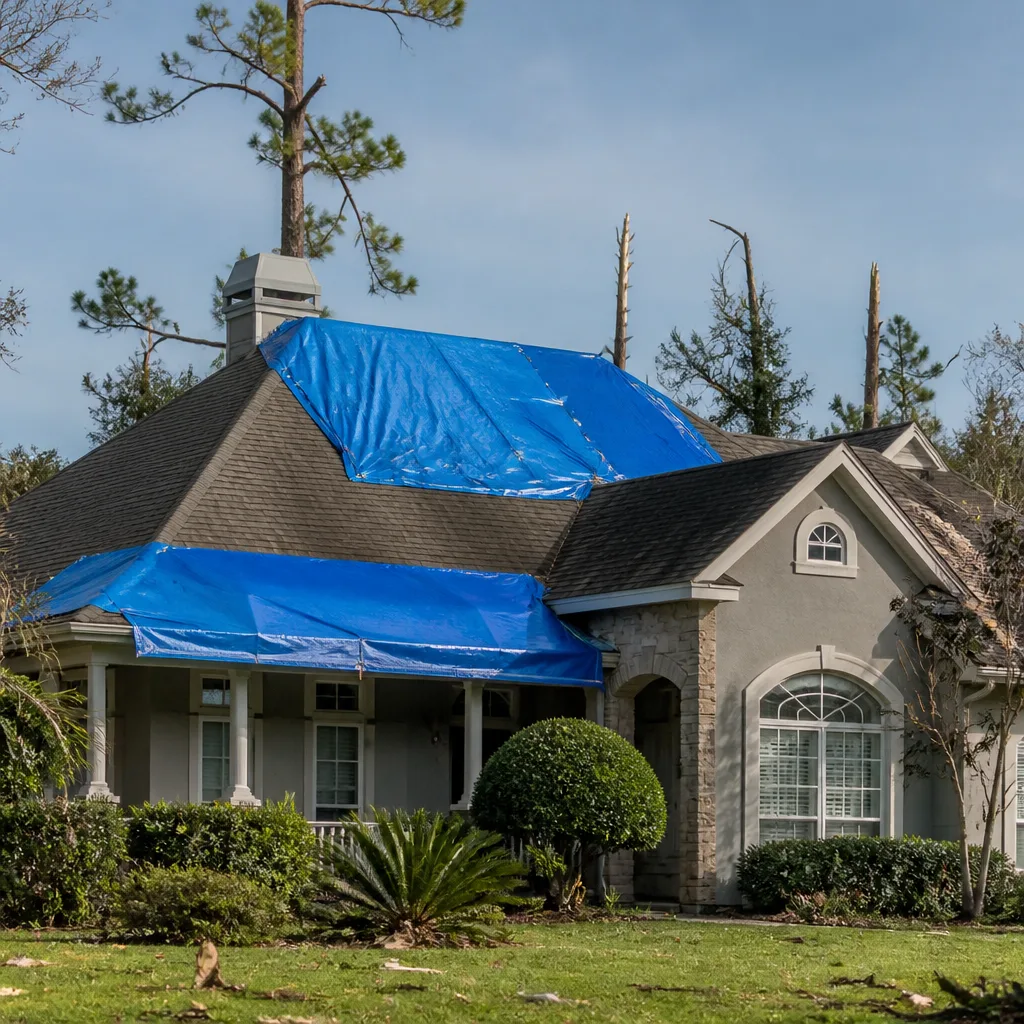 Storm response
 Sewage cleanup
 Reconstruction
Free visual inspection and a written scope of work before any mitigation begins - photos, moisture readings, and drying logs go in your claim file
The scope we write is the scope we bill. Anything new gets shown to you, in writing, before we touch it.
Get your free estimateHow to Hire a Damage Restoration Contractor in San Diego: A Step-by-Step Guide
After San Diego’s January 2024 flooding, the California Contractors State License Board saw a sharp rise in complaints against unlicensed restoration crews who took deposits and vanished. Some homeowners lost thousands before a single fan was plugged in. Others signed Assignment of Benefits forms without reading them and lost control of their own insurance claims. The frustrating part is that three specific questions, asked before you open the door, would have stopped most of those cases. This guide walks you through a hiring protocol that filters out bad actors in San Diego, from license verification to reading an estimate line by line, so you hire someone who shows up, does the job right, and stands behind the work in writing. For a broader overview, see The Complete Guide to Damage Restoration in San Diego.
Quick Answer
To hire a damage restoration contractor in San Diego, verify their California contractor license (C-10, C-20, or General B depending on the damage type) and IICRC certification, demand a written estimate with a fixed price before any work begins, refuse to sign an Assignment of Benefits form on the first call, and require a written workmanship guarantee of at least one year. A legitimate contractor will name an arrival window, document the damage in writing, and never pressure you to decide on the spot.
Restoration work we handle
Table of Contents
- Step 1: Verify the License and Certification Before Anyone Steps Inside
- Step 2: Red Flags That Show Up in the First Phone Call
- Step 3: How to Read a Written Estimate Line by Line
- Step 4: The Five Questions to Ask Before Signing Anything
- Step 5: What a Written 365-Day Guarantee Should Actually Contain
- Step 6: Insurance, Documentation, and Working With Your Adjuster
- What Damage Restoration Actually Costs in San Diego Right Now
- Common Mistakes to Avoid When Hiring a Restoration Contractor
Step 1: Verify the License and Certification Before Anyone Steps Inside
Every legitimate restoration contractor working in San Diego holds a California contractor license. The specific class matters. Water and fire damage restoration work typically falls under a C-10 (electrical), C-20 (warm-air heating, ventilating, and air conditioning), or General B (general building) license. A C-36 plumbing license applies when piping or fixtures are part of the scope. A handyman with a D-49 or a painting license is not licensed to dry out your walls or run air movers after a slab leak in Clairemont or a sewage backup in Rolando.
Verification takes under two minutes. Go to the California Contractors State License Board website (cslb.ca.gov), enter the contractor’s name or license number, and check three things: the license is active, the classification matches the work being proposed, and there are no recent disciplinary actions or suspensions. Read the “Bond and Insurance” tab too. A valid license means a $25,000 contractor bond is in place, which gives you a recovery path if the contractor abandons the job.
Beyond the state license, look for IICRC certification. IICRC stands for the Institute of Inspection, Cleaning and Restoration Certification, the recognized benchmark for damage restoration training. A contractor with IICRC-certified technicians in water damage restoration has demonstrated knowledge of psychrometric drying, which is the science of calculating moisture removal rates based on temperature, relative humidity (RH, the amount of moisture in the air), and air movement. In plain language, it means they know how to dry your home without over-drying it, which can crack drywall and warp hardwood.
You can verify IICRC certification at iicrc.org by entering the technician’s name. RIA (Restoration Industry Association) and IFA (International Federation of Aromatherapists, though in restoration IFA typically references the Institute for Flooring and Architectural Inspections) are additional benchmarks, but the two that matter most for San Diego homeowners are the CSLB license and IICRC certification.
License Verification Checklist
- Go to cslb.ca.gov and search the contractor’s name or license number
- Confirm the license shows “Active” status
- Match the classification to the scope of work (C-10, C-20, C-36, or General B)
- Check for disciplinary actions, suspensions, or complaints
- Confirm the bond amount is in place ($25,000 minimum for most classifications)
- Verify IICRC certification separately at iicrc.org
Step 2: Red Flags That Show Up in the First Phone Call
The first phone call tells you more than the first site visit. A contractor’s behavior in those first five minutes reveals how they will behave for the rest of the job. In San Diego, where storm chasers and out-of-state crews descend after every heavy rain event, the pressure tactics follow a predictable script. Knowing it in advance keeps you ahead.
The single biggest red flag is an immediate push to sign an Assignment of Benefits, or AOB. This is a legal form that transfers your insurance claim rights to the contractor. Once signed, the contractor deals directly with your insurer, bills for whatever they decide, and you lose the ability to dispute the work. AOB fraud has been a documented problem in California for years. A legitimate restoration company will say, “We’ll document the damage and work with your adjuster,” not “Sign here so we can get started immediately.”
The second red flag is a verbal-only estimate. Any contractor who says “we’ll figure out the price as we go” is telling you they plan to inflate the number once the equipment is inside your home. The Kingswell Way, the operating standard at Dryden Restoration San Diego home, is a written price before a tool is touched. The number does not change at the door.
The third red flag is no named arrival window. “We’ll be there sometime this afternoon” is not a commitment. A contractor who cannot tell you when they will arrive cannot tell you when the job will be done. San Diego traffic is predictable enough to name a two-hour window. If they won’t, they are not running a real schedule.
Other red flags in that first call: asking for a large deposit before any assessment, offering a “discount for cash,” refusing to provide a license number, using a cell phone with an out-of-state area code and no local address you can visit, and rushing you to commit because “the damage is getting worse by the minute.” Real damage does progress, but a real contractor answers your questions before asking for your signature.
Step 3: How to Read a Written Estimate Line by Line
A written estimate is either a transparent map of the work or a parking lot for inflated line items. Knowing the difference saves you thousands on water damage restoration in San Diego, where the market has a wide range in pricing between honest operators and those who see an insurance claim as a blank check. Our Water Damage Restoration Maintenance Checklist for San Diego Homeowners can help you stay ahead of problems.
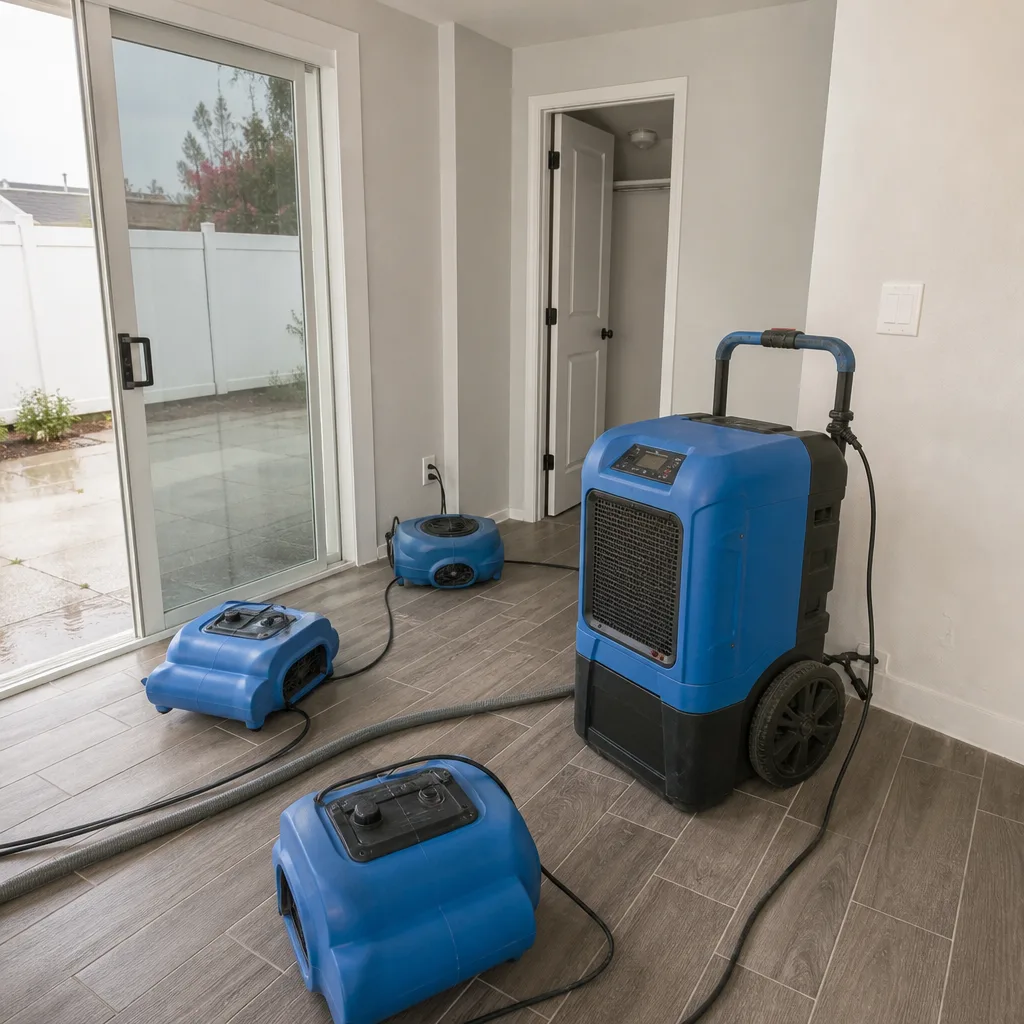
Start with the drying equipment line item. A legitimate estimate lists each air mover, dehumidifier, and HEPA air scrubber with a daily rate. In the current San Diego market, expect to pay $35 to $55 per day per air mover and $60 to $90 per day per dehumidifier. A typical three-to-four-bedroom home with water damage in two rooms needs 4 to 6 air movers and 1 to 2 dehumidifiers, running for 3 to 5 days. That means the drying equipment portion of your estimate should land between $900 and $1,800, not $6,000. If the per-day rates are double these numbers, you’re being oversold.
Look for a line item called “monitoring” or “daily moisture checks.” This is legitimate and should be included. A technician must check the drying progress daily with a moisture meter to adjust equipment placement. $75 to $150 per visit is reasonable. Some contractors charge a flat monitoring fee for the whole drying period, which is fine, but it should appear as a line item, not a vague “project management” charge.
Question these line items if they appear without explanation:
- Emergency service fee: $150 to $300 is normal for after-hours response. $1,000 is not.
- Project management fee: Often 10% to 20% of the total. This is overhead, not a separate service. Ask what it covers.
- Ozone treatment: Only legitimate for odor removal after fire damage. Never for routine water damage.
- Mold testing: Legitimate only if visible mold is present or the water sat for more than 48 hours. Not standard on a fresh-water extraction.
- Permit fees: Legitimate for reconstruction work. Ask for the actual permit number and fee schedule.
The total for a straightforward water extraction and dry-out in San Diego is typically $2,500 to $5,000 for a two-to-three-room affected area. A full mold remediation project ranges from $1,500 for a small contained area to $8,000 or more for a crawl space. Fire damage restoration is broader, from $5,000 for a small kitchen fire cleanup to $40,000+ for full-room reconstruction. These are real ranges for this market, not national averages from a survey website.
When Carl Brandt, owner at Dryden Restoration San Diego, walks a job, he writes the price before the crew unloads a single machine. That is the standard you should demand from any contractor. If an estimate requires a signature before you’ve had time to read it, that is not an estimate. That is a contract.
Step 4: The Five Questions to Ask Before Signing Anything
A good contractor welcomes these questions. A bad one deflects. Each question below is followed by what a trustworthy answer sounds like versus what a deflection sounds like.
- “Are you licensed, and will you show me the license number before any work starts?”
A trustworthy answer: “Yes. Our license number is [number], and you can verify it on the CSLB website. I’ll text you a photo of the license now.”
A deflection: “We’re fully licensed and insured, don’t worry about it. Let’s focus on your damage.” - “What is your arrival window, and what happens if you miss it?”
A trustworthy answer: “We’ll be there between 9 and 11 a.m. If we’re running late, you’ll get a call from the technician, not a call center. If we miss the window entirely, we’ll waive the emergency service fee.”
A deflection: “We’re really busy. We’ll do our best.” - “Will you put the price in writing before any equipment comes into my home?”
A trustworthy answer: “Yes. You get a written scope of work and a fixed price before we unload the truck. If we find something during the job that changes the scope, we stop and get your written approval before continuing.”
A deflection: “It’s hard to know until we get in there. We’ll give you a rough idea and finalize it at the end.” - “Do you offer a written guarantee on the repair, and what does it cover?”
A trustworthy answer: “You get the 365-Day Done Right Promise in writing on every job. If the repair fails within a year, we come back and fix it at no charge.”
A deflection: “Our work is guaranteed, don’t worry. We stand behind everything we do.” - “Who will be in my home, and how do I know they’re your employee?”
A trustworthy answer: “Every technician is background-checked and wears a Dryden uniform with a photo ID. You’ll know who’s in your home.”
A deflection: “We have great guys. They’ll introduce themselves.”
Ask these questions before signing anything. A contractor who answers all five clearly and without hesitation has structured their business around accountability. That is the company you want when water is spreading through your La Mesa home or smoke is climbing the walls of your Carlsbad kitchen.
Step 5: What a Written 365-Day Guarantee Should Actually Contain
A verbal promise is worth the paper it’s printed on, which is to say nothing. In restoration work, problems often surface months later. Drywall that looked dry in January swells in March. A repaired pipe holds through spring and fails in November. If your contractor’s guarantee is a handshake, you have no recourse. If it’s written, you have a case.
A real written workmanship guarantee contains at least these five elements:
- The specific scope covered: “All water extraction, drying, structural repairs, and mold remediation performed under this contract.” Not “the work we did.”
- The exact duration: “365 days from the date of completion.” Not “a year or so.”
- The trigger for a return visit: “If any covered repair fails to perform as intended, the contractor will return and correct the work at no additional charge.” Failure must be defined. Delamination of flooring, persistent odor, recurring moisture, and visible mold regrowth are common failure triggers.
- The response commitment: “Contractor will respond to any warranty claim within 48 hours and schedule a return visit within 7 days.” A guarantee with no response commitment is a suggestion.
- The exclusion list: Every guarantee has exclusions. Normal material wear, homeowner negligence, and damage from a new and separate event should be excluded. That is reasonable. What’s not reasonable is an exclusion list so long it makes the guarantee meaningless.
The 365-Day Done Right Promise at Dryden Restoration San Diego is printed on every contract. If a covered repair fails within a year, we return and correct it at zero cost, including a free second visit. The promise exists because a repair that fails six months later is not a completed job. It is a liability wearing a different calendar date.
Step 6: Insurance, Documentation, and Working With Your Adjuster
Insurance is almost always in the room when damage happens, even if no one says the word out loud. Whether your policy covers the work or you’re paying out of pocket, documentation decides the outcome. A contractor who photographs every step, writes moisture readings into a log, and invoices line by line gives your adjuster nothing to dispute. A contractor who hands over a one-line invoice for “$8,500 water damage cleanup” guarantees a fight.
Photo documentation should start before any equipment is placed. We photograph the standing water, the water line on the drywall, the baseboards, the flooring seams, and the cabinet interiors. Then we photograph the equipment in place, the daily moisture meter readings, and the final dry-out condition. This creates a record that answers the adjuster’s three questions: What was damaged? What did you do about it? What did it look like when you finished?
On the insurance billing side, you have two choices. You can work directly with your insurer and hire the contractor you want, or you can work with a contractor who coordinates with the adjuster. The first option keeps you in control. The second saves you time. A good restoration contractor offers both.
Never sign an Assignment of Benefits form without reading it fully and understanding what rights you’re giving up. In California, AOB fraud is a known problem, and homeowners who sign on the same day as the damage often regret it. If a contractor pressures you to sign an AOB before providing a written estimate, end the conversation. That is the same playbook storm chasers used after San Diego’s January 2024 flooding.
What Damage Restoration Actually Costs in San Diego Right Now
San Diego’s restoration pricing differs from the rest of the country in specific ways. The cost of living drives labor rates up compared to the Inland Empire or Riverside. The housing stock, much of it built before 1980 in neighborhoods like North Park, Normal Heights, and Point Loma, means older plumbing, difficult crawl space access, and lath-and-plaster walls that cost more to dry than modern drywall. And the coastal humidity in Mission Beach, Pacific Beach, and Ocean Beach means drying takes longer than it does in Escondido or El Cajon. You’re paying for more monitor visits.
Here are the line-item price ranges we see in the current San Diego market:
| Service | Typical San Diego Range | What Affects the Price |
|---|---|---|
| Water extraction and dry-out | $2,500 – $5,000 | Number of affected rooms, drying time, wall cavities |
| Air mover, per day | $35 – $55 | Brand, CFM rating, age of unit |
| Dehumidifier, per day | $60 – $90 | Pint capacity, brand (Dri-Eaz, Phoenix, XPOWER, B-Air) |
| Daily moisture monitoring | $75 – $150 per visit | Travel distance, number of affected rooms |
| Mold remediation, small area | $1,500 – $4,000 | Containment required, surface vs. porous materials |
| Mold remediation, crawl space | $4,000 – $12,000 | Access, encapsulation, structural drying |
| Fire damage restoration, small | $5,000 – $15,000 | Soot removal, smoke odor, structural repairs |
| Fire damage restoration, full room | $25,000 – $50,000+ | Rebuild scope, cabinetry, electrical |
These are real numbers from jobs we’ve priced and completed. A contractor quoting $12,000 for a two-room water extraction is either planning unnecessary work or padding the numbers. A contractor quoting $1,200 for a full mold remediation of a crawl space is either going to cut corners or abandon the job when it gets hard. The middle band is where honest contractors in San Diego live.
Common Mistakes to Avoid When Hiring a Restoration Contractor
- Hiring without checking the CSLB license. It takes two minutes online. An unlicensed contractor has no bond, no insurance requirement, and no recovery path if they disappear with your deposit, which happened repeatedly in San Diego after the 2024 flooding.
- Signing an Assignment of Benefits on the first call. This transfers your claim rights to the contractor and is the documented entry point for most restoration fraud in California. Read it fully or don’t sign it.
- Accepting a verbal estimate. A price that’s not written down is not a price. It’s an opening position for the negotiation they plan to have with you after the equipment is already running.
- Skipping the daily monitoring visits. Some homeowners decline monitoring to save $75 per visit. Then the drying goes too long, wood warps, and the repair costs more than the monitoring would have.
- Choosing the cheapest quote without comparing scopes. A $2,000 quote and a $4,000 quote for the same job usually differ in scope, not profit margin. Compare the line items side by side.
- Not getting the guarantee in writing. A handshake guarantee evaporates the moment the contractor’s phone stops being answered. Written terms are enforceable; a smile is not.
- Waiting to call. Water damage compounds. Every hour of delay in San Diego’s humid coastal zones adds drying time, which adds cost. The right time to call is the moment you see the water, not after the weekend.
See the difference
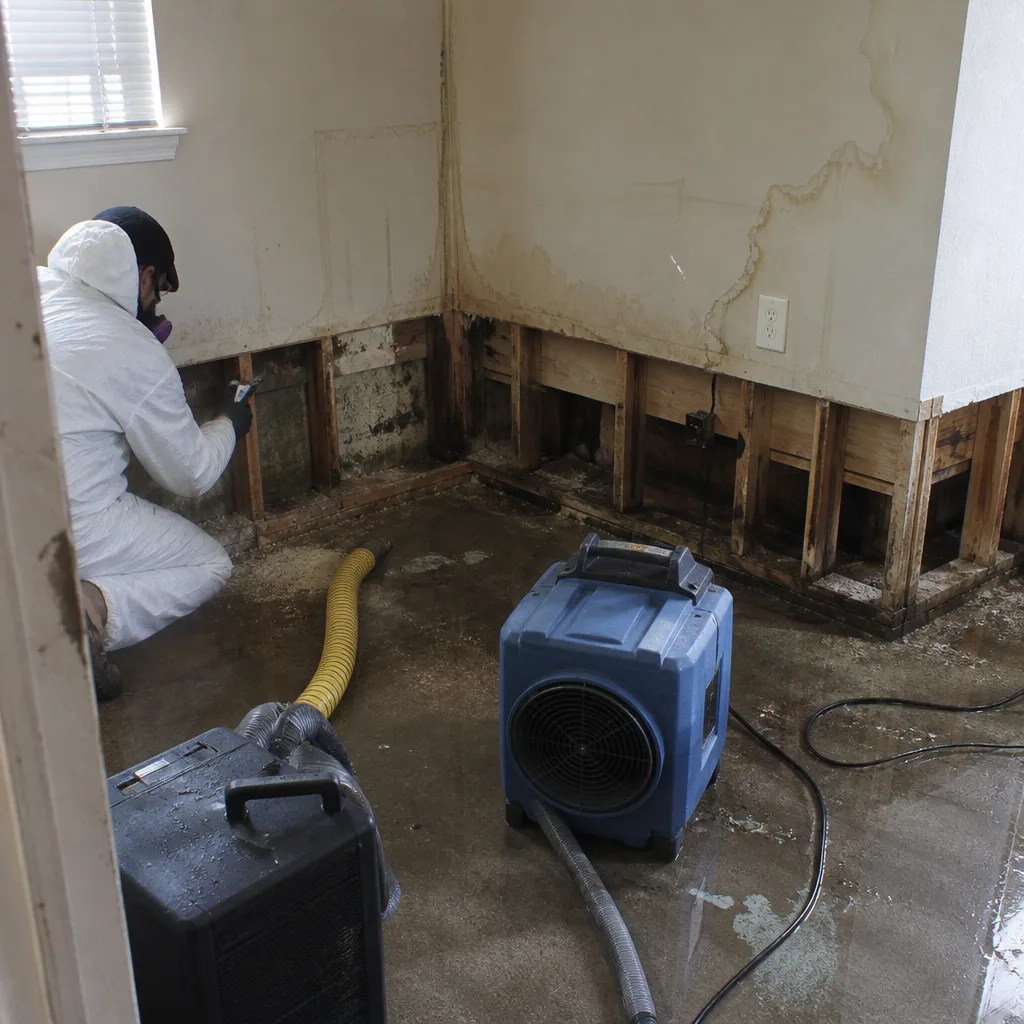 Before
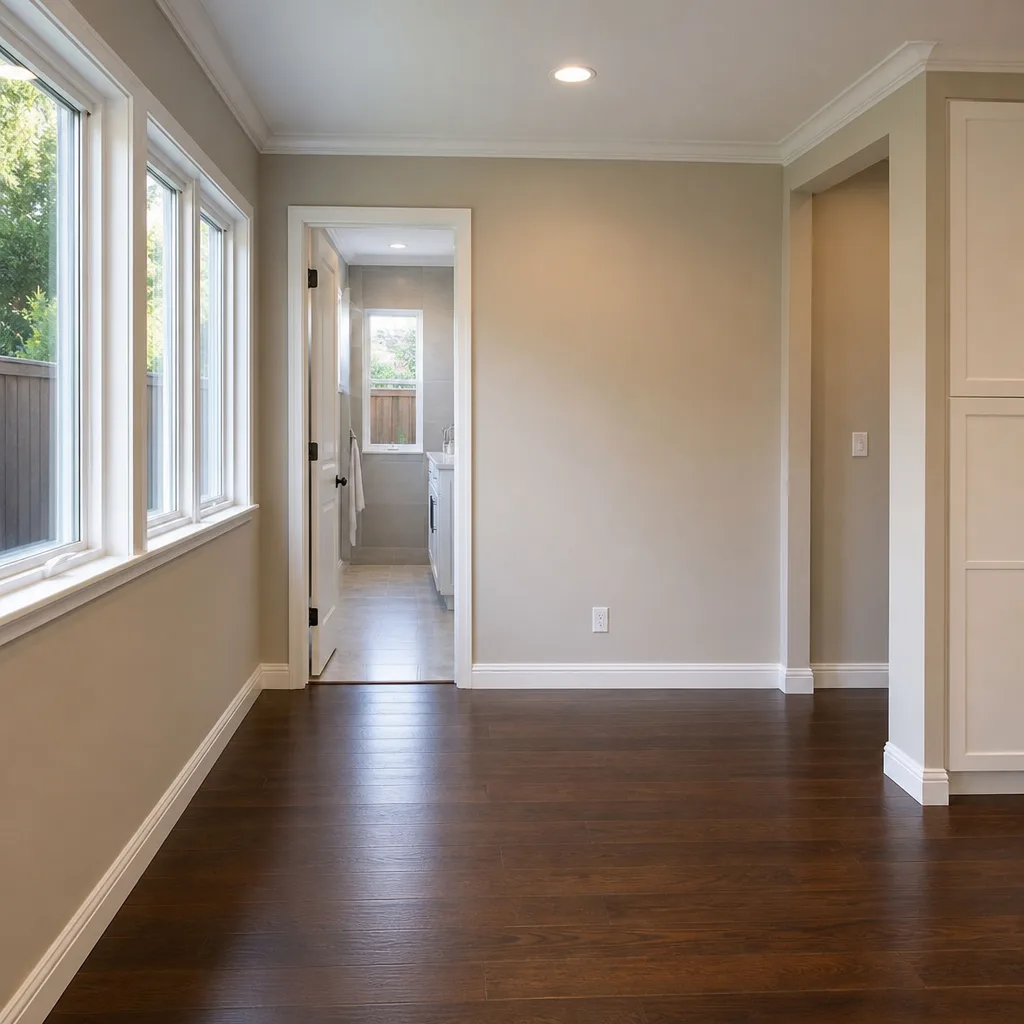 After
After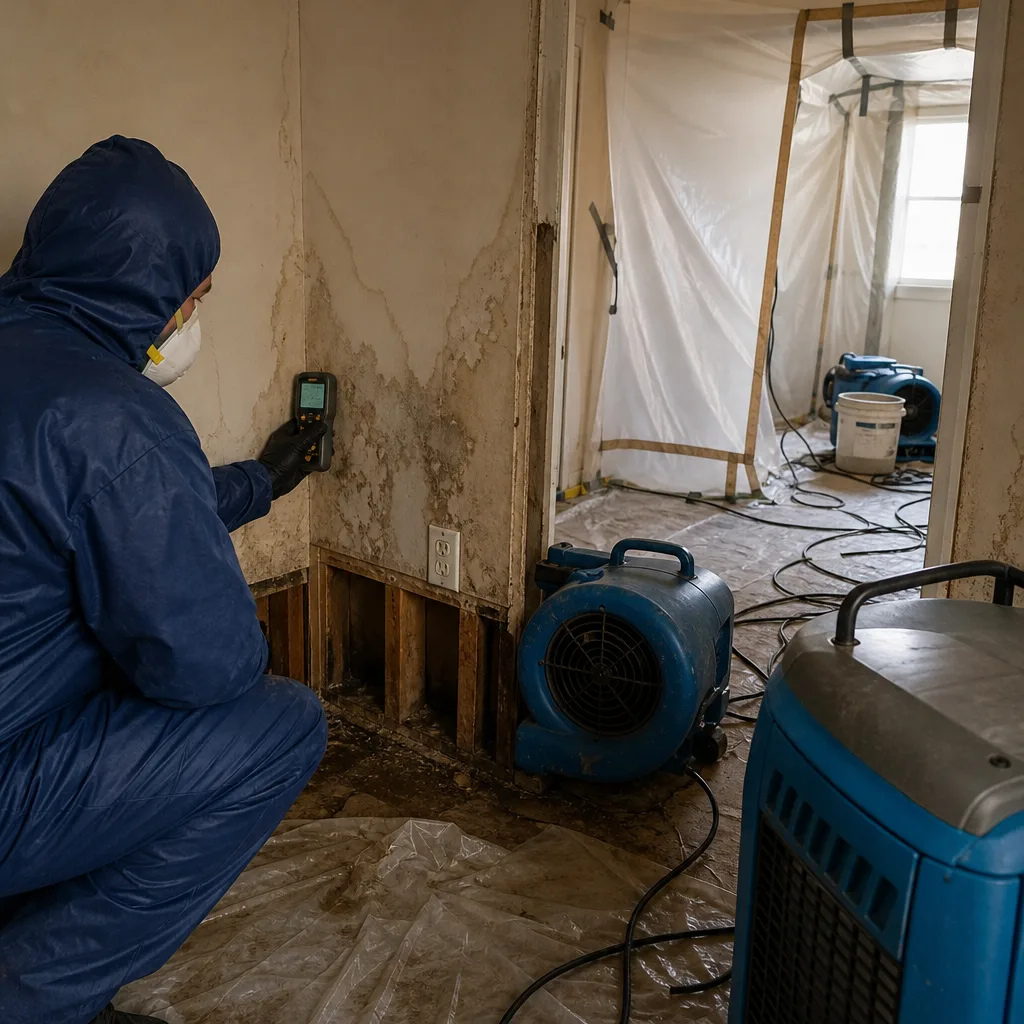 Before
 After
After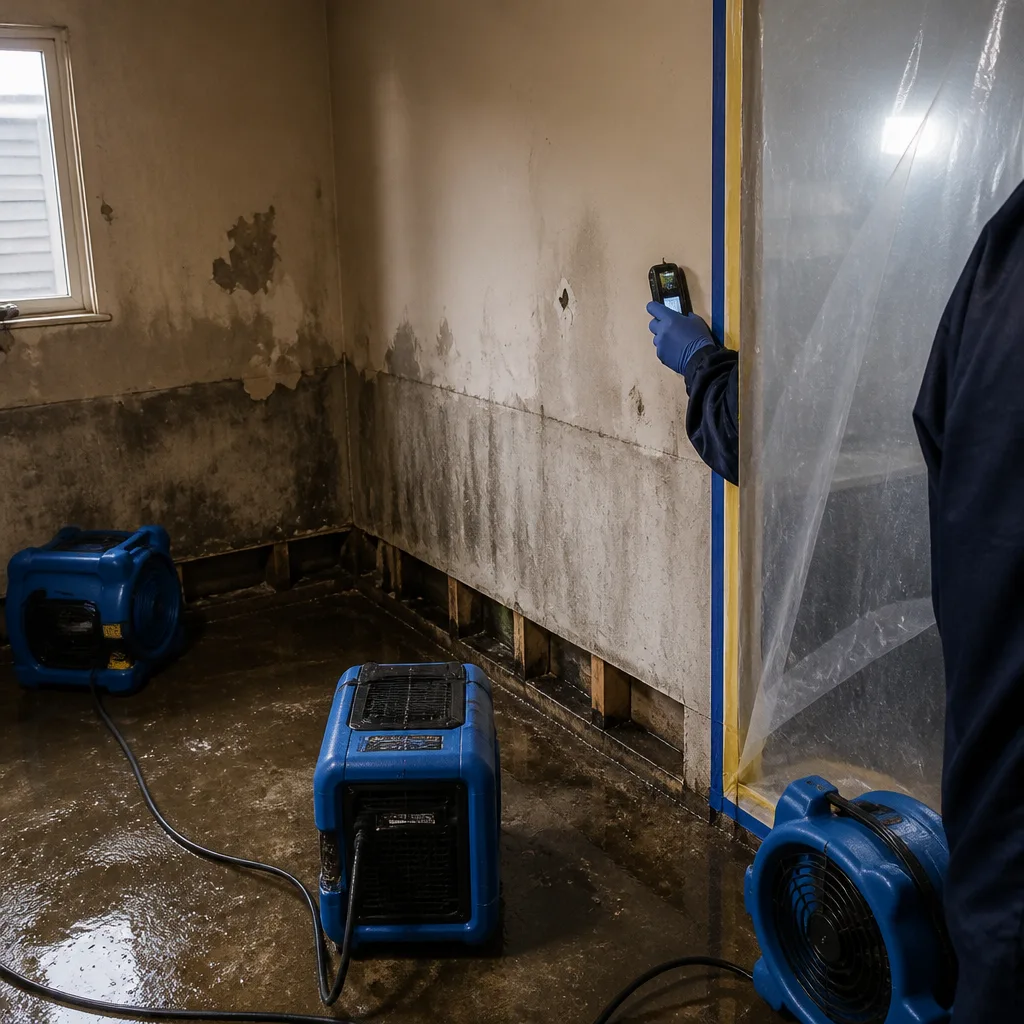 Before
 After
AfterWhen to Call a Professional
Call a restoration professional when the damage is beyond what a mop and a fan can handle. That means water that has touched drywall, flooring, or insulation. Mold that covers more than about 10 square feet, which is roughly the size of a bath towel. Fire damage that includes smoke, soot, or structural charring, because smoke particles penetrate surfaces that look clean and resurface as odor months later. A sewage backup, where the water contains pathogens and requires full containment and disinfection. A slab leak that has been running inside walls, where the drying requires professional-grade equipment like the Dri-Eaz dehumidifiers and XPOWER air movers our crews run every day.
Dryden Restoration San Diego offers free estimates in San Diego, with a live person answering the phone 24 hours a day. Call (619) 453-0410.
Frequently Asked Questions
Search the contractor’s name or license number on the California Contractors State License Board website (cslb.ca.gov) and check that the license is active, the classification matches the work, and no disciplinary actions appear. The process takes under two minutes and should be done before any contractor steps inside your San Diego home.
A legitimate restoration contractor in San Diego holds a C-10 electrical, C-20 HVAC, C-36 plumbing, or General B building license, depending on the scope of work. IICRC certification is the industry benchmark for restoration training and should appear alongside the state license. Call (619) 453-0410 to ask about ours.
Water extraction and drying in a two-to-three-room affected area typically costs $2,500 to $5,000 in San Diego, with air movers at $35 to $55 per day and dehumidifiers at $60 to $90 per day. Coastal humidity in neighborhoods like Pacific Beach can extend drying time and add monitoring visits. For an exact written quote on your San Diego home, call (619) 453-0410.
Insurance typically covers water damage from sudden, accidental events like a burst pipe, but not from gradual leaks or lack of maintenance. A restoration contractor should provide photo documentation and detailed line-item invoices that make the claim straightforward for your adjuster, and should never require you to sign an Assignment of Benefits before providing a written estimate.
A written guarantee should state the specific scope covered, the duration in days (not “about a year”), the conditions that trigger a return visit, the response commitment in days, and the exclusion list. The 365-Day Done Right Promise at Dryden Restoration San Diego covers all five and guarantees a free return visit if any covered repair fails within a year.
A real restoration company with a live-answer phone line can dispatch to San Diego neighborhoods the same day you call, often within a two-to-four-hour window. The key is that they name the window upfront and hit it. If a contractor cannot tell you when they’ll arrive, keep looking.
The Bottom Line
Hiring a damage restoration contractor in San Diego is a sequence of specific, verifiable checks, not a leap of faith. Verify the license and IICRC certification. Reject any pressure to sign an Assignment of Benefits before you’ve read it. Demand a written price before equipment enters your home. Ask the five questions and listen for what the good answers sound like. Get the guarantee in writing, with a specific duration and a specific trigger for the return visit. San Diego’s restoration market has real professionals who document their work, stand behind it, and answer the phone when you call. The protocol in this guide filters out everyone else. For more guides & resources, visit our blog. Call (619) 453-0410 for a free estimate from a team that puts the price, the window, and the guarantee in writing before the first machine is unloaded.
Written by Carl Brandt, Owner at Dryden Restoration San Diego, serving San Diego since 2005.