
Last updated October 16, 2026
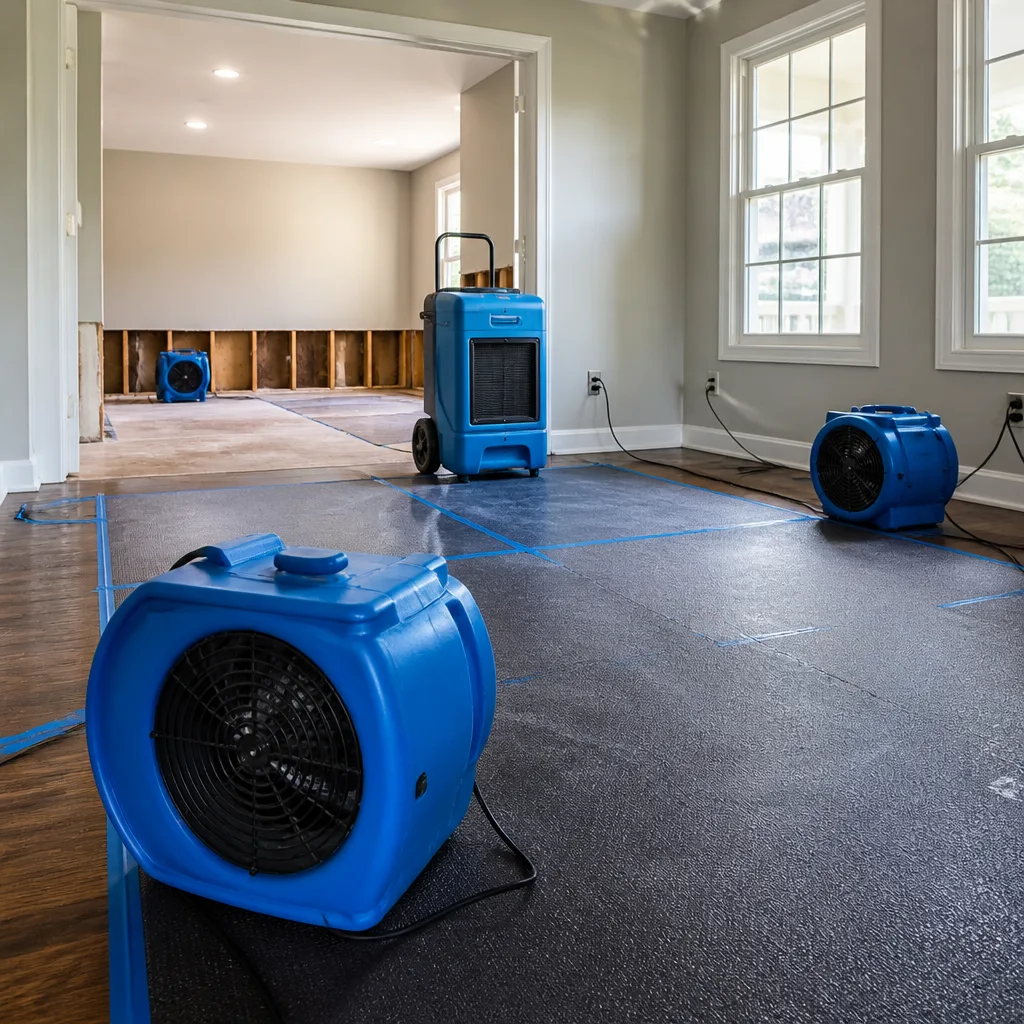 Water damage drying
 Fire & smoke cleanup
 Mold remediation
 Storm response
 Sewage cleanup
 Reconstruction
Free visual inspection and a written scope of work before any mitigation begins - photos, moisture readings, and drying logs go in your claim file
The scope we write is the scope we bill. Anything new gets shown to you, in writing, before we touch it.
Get your free estimateSeasonal Damage Restoration Care for San Diego: Year-Round Homeowner’s Guide
San Diego averages only about 10 inches of rain per year, but roughly 80% of it lands inside a single 90-day stretch between December and March. That concentrated load is why so many San Diego homes take water damage in bunches: dry months lull homeowners into postponing the small stuff until one heavy atmospheric river arrives and finds every deferred repair at once. This guide walks through San Diego’s four actual damage-risk seasons, the specific tasks that matter in each, how long they take, and when a job has moved past what a homeowner should handle alone; for a deeper dive, see our Complete Guide to Damage Restoration in San Diego.
Restoration work we handle
Quick Answer
San Diego’s damage risk follows four real seasons, not the traditional calendar: pre-rain preparation in October and November, active rain monitoring December through March, the coastal marine layer’s slow moisture buildup April through June, and thermal-cycling damage during Santa Ana and heat season July through September. The highest-return homeowner tasks are gutter and downspout maintenance in the fall, weekly slab and stucco checks during winter storms, ventilation and condensation control near the coast in spring, and exterior sealant and caulking work in late summer. Professional help is warranted whenever water has penetrated a wall cavity, when mold is already visible, or when a repair involves roof access, electrical panels, or high-tension components; our Water Damage Restoration Maintenance Checklist for San Diego Homeowners details what to check each season.
Table of Contents
- October – November: The Pre-Rain Window San Diego Ignores
- December – March: Active Rain Season Monitoring
- April – June: Marine Layer Season and Hidden Moisture
- July – September: Santa Ana, Heat, and Thermal Cycling
- Month-by-Month Quick Reference Calendar
- Common Mistakes to Avoid
- When to Call a Professional
- Frequently Asked Questions
- The Bottom Line
October – November: The Pre-Rain Window San Diego Ignores
Every year, the first meaningful rain catches a meaningful number of San Diego homes unprepared. The reason is structural: San Diego’s housing stock skews heavily toward Spanish-tile and concrete-tile roofs, and a tile roof is only as waterproof as the underlayment beneath it. Tiles can look intact from the ground while the felt or synthetic barrier underneath has been quietly deteriorating for years. October is the month to catch that.
What to check, in order of priority
- Roof tile and underlayment. Walk the perimeter (or use binoculars from the ground, never climb onto a tile roof without training and fall protection). Look for shifted, cracked, or missing tiles. A displaced tile exposes underlayment to UV and then to water. In Clairemont and North Park, where many homes date to the 1950s and 1960s, we regularly find original underlayment that has simply outlived its service life. A tile roof’s underlayment typically last 20 to 40 years depending on grade, slope, and exposure. If the home’s roof replacement is a memory from the Clinton administration, a professional inspection in October is the single highest-value seasonal task.
- Gutters and downspouts. San Diego’s gutters fill with a specific mix: eucalyptus leaf litter, pine needles, and a fine gray dust that hardens into a paste when wet. That paste blocks downspout elbows. Pour water into each downspout and watch for backsplash at the top or a slow trickle at the exit. A downspout that trickles is already partially blocked. Downspout extensions matter here more than in wetter cities because San Diego homes are often built with minimal setback; a downspout that dumps water within two feet of the foundation wall concentrates more water into the soil than a heavy rain alone would deliver.
- Exterior caulking and window flashing. Walk the exterior and tap-test caulking around windows, doors, and any utility penetrations like hose bibs, electrical conduits, or gas lines. Caulk that has gone brittle (tapping produces a hard, dead sound rather than a subtle flex) is finished. Cut it out and replace it with a quality exterior-grade sealant before the first atmospheric river. This is a two-to-three-hour DIY job on a single-story ranch; on a two-story Mission Hills or La Jolla home, the ladder work pushes it into professional territory.
- Slab-level grade and drainage. The fastest water-intrusion failures we see in San Diego happen at the slab level, not the roof. Check that soil and landscaping material slopes away from the foundation at least six inches over the first ten feet. If a prior owner’s flower bed has built up against the stucco, regrade it. This is the same foundational principle that governs water damage restoration in San Diego: keep water moving away from the envelope of the house, and you prevent most of the problems before they start.
A final note on timing: the first big rain usually arrives in late November or December. A professional roof, gutter, and drainage assessment takes one technician about 90 minutes to two hours and costs considerably less than a single day of emergency water extraction after a leak goes uncaught.
December – March: Active Rain Season Monitoring
During San Diego’s rain season, the damage pattern is predictable but deceptive: leaks often show up not during the heavy downpour, but one to three days later, once water has saturated through layers of building material and found a path to visible surface. That delay is why a “minor” leak in January can be a full wall-cavity mold problem by March.
Weekly checks that catch problems early
- Walk every room and sniff. Mold’s first warning sign is usually a smell, not a stain: musty, earthy, or “old books” odor in a room that did not have it before. In coastal neighborhoods like Point Loma, Ocean Beach, and Imperial Beach, the baseline humidity can mask this smell. If you notice it, do not wait for visible staining; check behind furniture that sits against exterior walls, under sinks, and in closet corners on exterior-facing walls.
- Check slab edges and baseboards after extended rain. Water intrusion at the slab level shows up first as: swollen or discolored baseboards, a tide line of mineral deposits on the concrete slab edge inside a garage, dampness at carpet edges, or a “shadow” of darker concrete along a wall line. In Mission Valley and other neighborhoods with heavy clay soil, watch for hairline cracks in stucco near the ground line after heavy rains; expansive clay pushes and pulls foundation members.
- Monitor standing water in the yard. Standing water that persists for 24 hours after a storm is not, by itself, a foundation emergency. It becomes a concern when (a) it sits within five feet of the foundation, (b) the water level touches the stucco or siding, or (c) you see new cracking in interior walls or a door that starts sticking that did not stick before. Any one of those three is a call to a professional. All three together is a same-week inspection.
When a “small leak” is actually a wet wall cavity
A common failure pattern in San Diego’s stucco-and-frame construction: water enters through a failed window flashing or a crack in the stucco, runs inside the wall cavity, and soaks the insulation and framing for weeks or months before the homeowner notices a soft spot or a stain. By the time the stain appears, the damage inside the wall is often far more extensive than the visible surface suggests. Professionals use moisture meters and thermal imaging cameras to map the actual wetted area before opening any drywall, a discipline governed by the IICRC’s S500 water damage restoration standard. The same logic applies to mold remediation in San Diego: visible mold is usually the tip of a larger subsurface colony, and remediation that only treats the visible area is incomplete.
During the rain season, Dryden’s live phone line (every call answered by a person, 24/7, at (619) 453-0410) tends to ring hardest in the days after each storm front passes. The callers who catch problems early pay less, repair less, and lose less time out of their homes than the callers who wait.
April – June: Marine Layer Season and Hidden Moisture
From April through June, much of coastal San Diego lives under the marine layer: a persistent morning-and-evening overcast that keeps relative humidity (RH) above 70% for hours at a stretch. RH is the measurement of how much moisture the air holds relative to its maximum at a given temperature. When warm, moist air contacts a cold surface, it condenses. That condensation is the slow, invisible moisture source that catches coastal homeowners by surprise because it never involves rain.
Where condensation damage hides in coastal San Diego homes
- Single-pane windows in older coastal homes. Homes built before the mid-1980s in La Jolla, Point Loma, and Coronado often still have single-pane windows. During marine layer season, those panes are cool enough to condense interior moisture every morning. The water runs down to the window sill, soaks into the drywall or wood, and repeats daily for ten to fourteen weeks. The result is a slow, chronic moisture load that produces mold in the window framing, under the sill, and in the surrounding wall cavity, often without any visible sign until a room is repainted or a window is replaced.
- Bathrooms with inadequate exhaust. Without a functioning exhaust fan, shower moisture lingers and then condenses on cooler wall and ceiling surfaces. The damage pattern is slow: first a flexing or bubbling in the ceiling texture, then a pinprick pattern of dark dots (mold colonies) around the fan housing or in the corners. A bathroom fan that vents into the attic rather than through the roof is a self-inflicted moisture system: the attic becomes the condensation surface, and the first visible sign may be damp roof sheathing above the bathroom.
- Closets and cabinets on north-facing exterior walls. North-facing exterior walls get almost no direct sun in San Diego. During marine layer season, these walls stay cooler for longer hours each day, which makes them condensation surfaces. Clothes and stored goods pressed against those walls restrict airflow and trap moisture in fabric, where it produces that distinctly sour, stale smell.
What to do during marine layer season
- Run the exhaust fan during every shower, and for 20 minutes after. Verify that air actually moves: hold a single square of toilet paper up to the running fan; it should pull the paper toward the grille. If it does not, the fan or the duct is clogged, and the fix is usually cheaper than the damage it prevents.
- Keep interior doors cracked and closets breathing. Air movement is the cheapest dehumidifier that exists. Closets on exterior walls should have a two-inch gap at the top and bottom of the door if they contain anything but clothes that get washed regularly.
- Check window sills and frame corners every two weeks, not every two months. The first sign is usually a slight darkening of the caulk line or the start of a musty odor. If you find it early, the fix is a $12 tube of caulk and a week of ventilation. If you find it late, it is drywall removal, framing inspection, and remediation.
For homeowners in the coastal band, marine layer season is the time when a professional moisture assessment pays for itself most quickly. Dryden’s technicians carry professional-grade moisture meters and thermal imaging equipment (Dri-Eaz, Phoenix, and XPOWER are among the brands we run; all work is performed to IICRC standards) that can identify a slow accumulation long before it becomes visible mold.
July – September: Santa Ana, Heat, and Thermal Cycling
San Diego’s late-summer and early-autumn damage risk does not come from water at all. It comes from heat and from the Santa Ana wind pattern, and the damage mechanism is thermal cycling: the repeated expansion and contraction of building materials as they heat up during the day and cool at night. In San Diego’s inland valleys like El Cajon, Santee, and Poway, a single summer day can swing from 65 degrees before dawn to 100 degrees by afternoon. That 35-degree daily swing is a stress test for every exterior sealant, expansion joint, and roofing material the home has.
What thermal cycling damages first
- Caulking around windows, doors, and trim. Exterior caulk is the home’s most replaceable and most neglected waterproofing layer. Thermal cycling eventually splits it open, at which point it stops being a waterproof joint and becomes a water channel. Summer is the ideal time to replace it: warm, dry surfaces allow sealants to cure correctly, and you are working in the dry-before-rain window that sets up the October checklist above.
- Roof sealants and flashing bonds. Flat and low-slope roof sections, common on San Diego’s mid-century and contemporary homes, are sealed at seams and penetrations with mastic or roof cement. Thermal cycling breaks those bonds slowly, starting as hairline separations around vent pipes, skylight curbs, and parapet walls. July through September is the best window for a professional roof inspection in San Diego because the dry conditions make it possible to reseal properly.
- Stucco and expansion joints. Stucco expands and contracts at a different rate than the wood framing behind it. Over years, this produces hairline cracks, especially at window and door corners. Hairline cracks are normal; cracks wider than a credit card’s thickness, or cracks that run in a stair-step diagonal pattern, are not. On an exterior wall that faces the afternoon sun, a wide-open crack is a standing invitation for the first December rain.
Why summer is San Diego’s true waterproofing season
Most homeowner maintenance calendars put “waterproofing” in the spring, but San Diego’s actual climate flips that logic. The marine layer makes spring outdoor work slow: surfaces stay damp, sealants cure badly, and a morning’s work is often cut short by the coastal overcast. Late summer and early fall, from mid-August through early October, is San Diego’s best weather window for exterior work: warm, dry, stable. You are not preparing for rain; you are preparing the surfaces before the rain arrives. The same principle governs fire damage restoration in San Diego, where dry-season structural inspection matters because heat-degraded materials fail differently than water-damaged ones. The common thread is that damage prevention beats damage response, every time.
Month-by-Month Quick Reference Calendar
Here is the full San Diego seasonal damage-prevention calendar in one place. Time estimates are for a typical single-story, 1,400 to 2,200 square foot home, and the professional-threshold column marks where we recommend stopping.
| Month | Task | Time Needed | Professional Threshold |
|---|---|---|---|
| October | Biannual gutter clean-out; test each downspout with running water | 2 – 3 hours | Home is two-plus stories; downspout is clogged internally and cannot be cleared from ground |
| October | Roof tile and underlayment inspection | 1 hour (ground/binos) | Any shifted, cracked, or missing tile that requires roof access to inspect |
| November | Exterior caulk replacement around windows, doors, and utility penetrations | 2 – 4 hours | Work above the first story; cracks wider than 1/8 inch; any area showing prior water staining |
| November | Slab-level drainage regrading; downspout extensions | 3 – 5 hours | Grade needs more than 4 inches of material adjustment; persistent slab-level dampness |
| December | First-rain response: check for interior water during/after first heavy storm | 30 minutes | Any water intrusion, even a small stain, in an exterior wall or ceiling |
| January | Weekly slab-edge, baseboard, and interior wall check | 20 min/week | New sticking door, new stucco crack, or standing water within 5 feet of foundation |
| February | Inspect attic space after sustained rain for wet sheathing or damp insulation | 45 minutes | Any dampness on roof sheathing, mold growth on framing, or visible water droplets |
| March | Check all crawlspace or basement areas for standing water; inspect vapor barrier | 1 hour | Standing water remains 48 hours after last rain; damaged or absent vapor barrier |
| April | Begin marine-layer condensation checks: window sills, closet corners, bathroom ceilings | 30 min/2 weeks | Repeated visible condensation; first signs of dark spotting or “old books” odor |
| May | Verify bathroom exhaust fans move air; clean fan grilles and check duct exits | 1 – 2 hours | Fan vents into attic; fan does not pull paper test at grille; attic-side mold visible |
| June | Check north-facing exterior walls, closets, and under-sink cabinets for moisture | 45 minutes | Visible mold in any cabinet or closet; drywall feels soft or “gives” under pressure |
| July | Inspect exterior caulk after first heat wave for splitting or shrinking | 1 hour | Splits wider than a credit card; window or door trim pulling away from wall |
| August | Roof sealant and flashing inspection; reseal flat-roof penetrations if needed | 1 – 2 hours | Any roof-sealing work on low-slope or flat roof sections |
| September | Pre-season full exterior walk-around; finish any open waterproofing tasks | 2 hours | Any task that remains undone from the July/August lists |
Common Mistakes to Avoid
- Assuming a tile roof is waterproof because the tiles look fine from the curb. San Diego’s Spanish-tile roofs are watershedding layers; the waterproof barrier is the underlayment beneath them, and it degrades on its own schedule. We have opened tile roofs in Clairemont and La Mesa where the underlayment had been gone for a decade while the homeowner believed the roof was sound.
- Deferring gutter cleaning until “the rainy season.” By the time the first storm arrives, the eucalyptus litter and dust paste have already been sitting in the gutters for months. A gutter that is half-clogged when the rain starts is fully clogged by the second storm.
- Ignoring the “old books” smell for a few weeks. That smell is the single most reliable early-warning system for hidden mold that exists. By the time you see staining, the problem is deeper and the remediation is larger. Do not talk yourself out of the smell.
- Running a bathroom fan only while showering. The fan’s job is to remove moisture after the shower, too. The 20 minutes after the shower is when the warm, saturated air is doing its damage. Turn the fan off too early and you have simply moved the moisture problem to the next morning.
- Replacing caulk in the wet spring months because that is what the national calendar says. San Diego’s spring is not like the national spring. Wet marine layer air prevents exterior sealants from curing properly. Do caulking work in the dry months, August through October.
- Assuming standing water far from the house is harmless. Water that pools 20 feet from the home is usually fine. Water that pools near the foundation, touches the stucco, or coincides with new cracks or sticking doors is a foundation-movement signal. The distance from the house matters much more than the amount of water.
When to Call a Professional
Most of the tasks in this guide are DIY-appropriate for a handy homeowner. But there are clear crossing points. Call a professional when: water has visibly penetrated a wall or ceiling, and you cannot see the full extent of the wet area; you smell musty odors that persist after cleaning and ventilation; you see mold on more than a few square feet of surface; you have a stucco crack wider than a credit card that appeared or widened recently; your roof tile inspection requires actual roof access; or any water-related issue involves electrical panels, wiring, or outlets. In our experience, the single most expensive mistake a San Diego homeowner makes is waiting because “it does not look that bad”; for more guides & resources on catching problems early, visit our blog. Water damage spreads through wall cavities and under flooring long before it shows itself. Dryden Restoration San Diego offers free estimates in San Diego, and our technicians will document exactly what they find with moisture readings and photos. Call (619) 453-0410 and a live person answers, any hour, any day.
Frequently Asked Questions
Most San Diego seasonal water damage repairs fall between $500 and $4,500 depending on the extent and location. A simple exterior caulk replacement might run $300 to $700 for labor and materials. A slab-level leak that has wetted a wall cavity and requires drywall removal, drying, and reinstallation typically starts around $1,800 and goes up from there. The variables are how far the moisture traveled, whether insulation and framing are involved, and whether mold is already present. The earlier a problem is caught, the smaller the repair. For an exact number, call (619) 453-0410. Dryden gives every customer a written price before any work starts.
The earliest interior warning signs are a persistent musty or earthy smell, baseboards that have swollen or discolored at the bottom edge, and a faint “shadow” on painted walls near the baseboard or at window corners. Sticking doors and newly developed stucco cracks can also signal moisture-related expansion or movement. Once you notice a soft or spongy area in drywall, the wall cavity has likely been wet for some time.
If visible mold covers less than about ten square feet on a non-porous surface like tile or glass, cleaning it yourself with soap and water is generally acceptable. If mold is on drywall, insulation, or wood framing, or if it covers more than ten square feet, professional remediation is warranted: porous materials must often be removed, not cleaned, and improper remediation can spread spores through the home’s air system. Professional standards like those from IICRC and RIA exist specifically because partial mold removal frequently fails.
Dryden answers every call live, 24 hours a day, 7 days a week. For active water intrusion, we aim to have a technician at your San Diego door the same day you call, often within hours. For non-emergency inspections and assessments, we schedule the earliest available slot that matches your availability. You will always receive a committed arrival window, and we show up within the window we gave.
Coastal San Diego’s marine layer keeps relative humidity above 70% for extended periods, and that humid air condenses on cool interior surfaces: single-pane windows, north-facing walls, unheated closets, and under-sink cabinets. The persistent dampness feeds mold growth even when no leak exists. The fix is usually a combination of better ventilation, exhaust fan upgrades, and sometimes a dehumidifier, plus a professional moisture assessment to map exactly where the problem has taken hold.
Most standard homeowners policies cover sudden and accidental water damage, such as a burst pipe or storm-driven roof leak. They generally do not cover damage from deferred maintenance, such as a roof that has been leaking slowly for months or mold that developed from an ignored condensation problem. We recommend documenting everything with photos and contacting your insurer as soon as you detect a problem. Dryden’s technicians photograph all findings during every assessment, and we can work directly with your adjuster to clarify scope and coverage.
The Bottom Line
San Diego’s damage risk follows a real calendar, and homeowners who sync their maintenance to that calendar pay less and avoid the worst outcomes. Do the roof, gutter, and drainage work in October and November. Monitor slabs, baseboards, and walls weekly through the winter rain months. Treat the marine layer as a moisture source every bit as real as rain from April through June, especially in the coastal band. Use the dry heat of late summer to reseal, recaulk, and waterproof before the next rain cycle starts. And when you are not sure, get a professional assessment early. A one-hour inspection costs a fraction of a wall-cavity mold repair. The Dryden Restoration San Diego home page has more about how we work, and all four seasonal risks map back to our core services: water, mold, and fire restoration.
Written by Carl Brandt, Owner at Dryden Restoration San Diego, serving San Diego since 2005.
See the difference
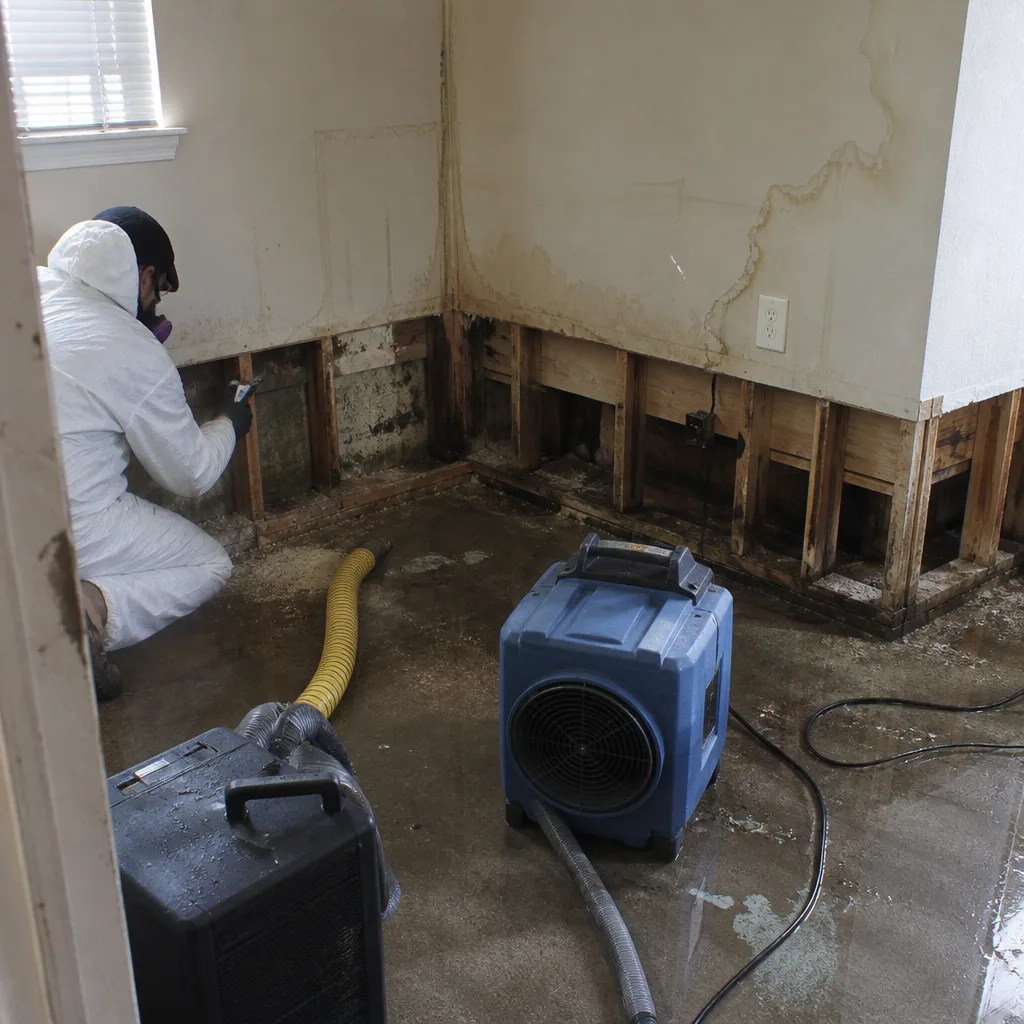 Before
 After
After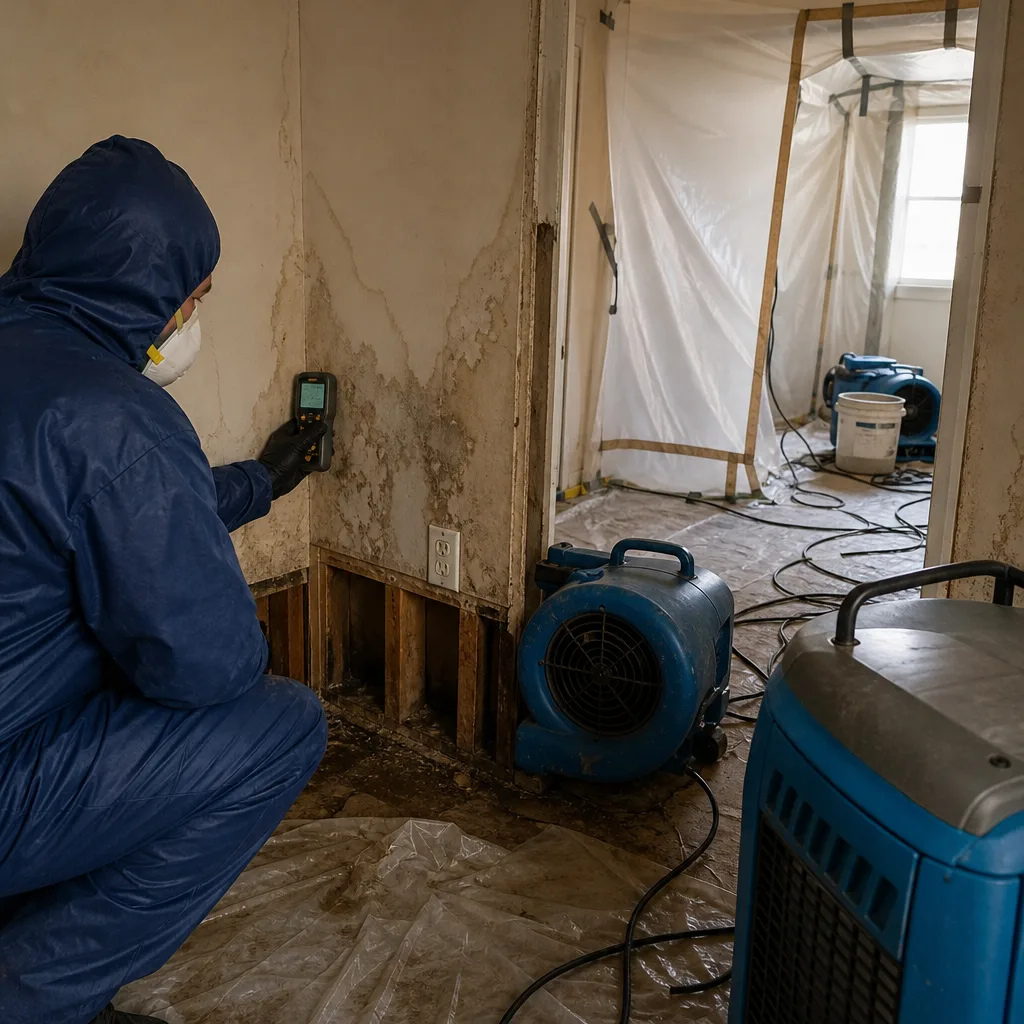 Before
 After
After Before
 After
After